Stock Trading Explained for Smarter Investment Decisions
Stock trading has emerged as one of the most dynamic fields in modern finance, giving individuals the chance to buy and sell shares of publicly listed companies. Unlike in the past, when access to financial markets was limited to professionals and large institutions, today anyone with an internet connection can participate in global markets.
This new accessibility has transformed trading into a popular pathway for those seeking financial growth and independence. While the opportunities are exciting, success requires more than just enthusiasm—it demands knowledge, discipline, and well-structured strategies.
What is Stock Trading?
At its core, stock trading is the process of buying and selling shares of publicly listed companies. Traders aim to profit from fluctuations in stock prices, either in the short term or over the long term.
Unlike long-term investing, which focuses on holding assets for years, trading usually involves more frequent transactions. Understanding stock trading basics is crucial for making informed decisions and avoiding unnecessary risks.
History of Stock Trading
The history of stock trading dates back to the early 1600s in Amsterdam, where the first official stock exchange was created. From there, trading expanded to London and eventually to the United States, where the New York Stock Exchange became one of the largest and most influential financial markets in the world. Over time, trading shifted from physical floors with loud brokers to fully digital systems.
Today, thanks to technology, stock trading online has made global markets accessible to Anyone with an internet connection.
Stock Trading Basics
For beginners, starting with stock trading basics is essential. Here are some key concepts:
- Stock shares represent ownership in a company.
- Dividends are payments made by a company to its shareholders from profits.
- Bull Market: A market where prices are rising.
- Bear Market: A market where prices are falling.
- Broker: An intermediary who facilitates transactions between traders and the stock market.
Types of Stocks
To succeed in stock trading, it is important to understand the different types of stocks available:
- Common Stocks: These provide ownership rights and usually voting rights, but dividends are not guaranteed.
- Preferred Stocks: These typically offer fixed dividends and have priority over common stockholders during liquidation.
- Growth Stocks: Shares of companies expected to grow faster than the market average.
- Value Stocks: Shares that appear undervalued compared to their financial performance.
- Domestic vs. International Stocks: Domestic stocks belong to local companies, while international stocks provide exposure to foreign markets.
Stock Trading Online
One of the biggest advancements in finance is the availability of stock trading online. Unlike traditional trading floors, online platforms allow investors to trade from anywhere in the world with just a computer or smartphone. Here are some advantages:
- Accessibility: Anyone with an internet connection can trade.
- Lower Costs: Many brokers offer commission-free trading.
- Real-Time Data Instant access to market news, charts, and analytics.
- Flexibility: Ability to trade at any time during market hours.
Choosing the Right Stock Trading Platform
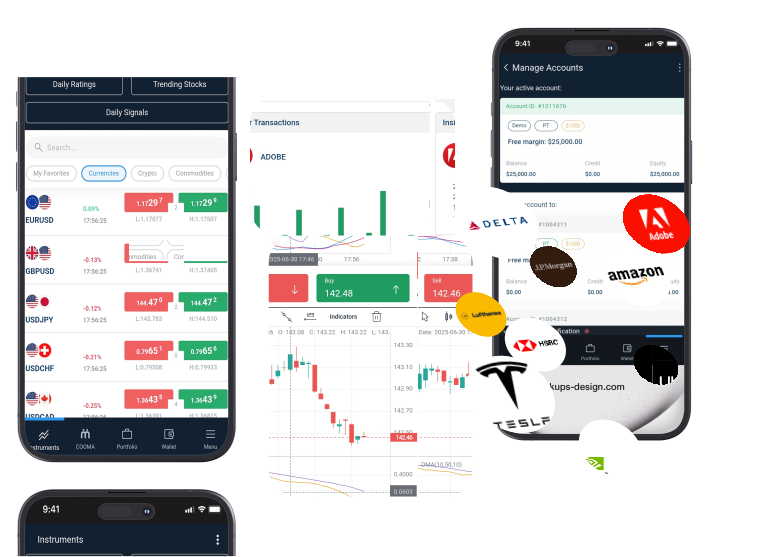
A stock trading platform is the software or online interface that allows you to place trades, monitor markets, and manage your portfolio. Selecting the right platform is one of the most important steps in your trading journey. Consider these factors:
- User Interface: Easy-to-use navigation for beginners.
- Fees: Low commissions and transparent pricing.
- Research Tools: Access to market analysis, charts, and trading signals.
- Customer Support: Availability of reliable assistance when needed.
- Mobile Access: A robust mobile app for trading on the go.
Stock Trading Techniques
Once you understand the stock trading basics, it’s time to explore different stock trading techniques. These strategies help traders make better decisions and increase profitability. Here are a few common methods:
- Day Trading: Buying and selling stocks within the same day to take advantage of small price movements.
- Swing Trading: Holding stocks for several days or weeks to capture medium-term trends.
- Scalping: Executing multiple trades throughout the day for very small profits.
- Position Trading: Holding stocks for months or even years, focusing on long-term trends. Using the right stock trading techniques depends on your risk tolerance, capital, and time commitment.
Working with a Stock Trading Company
Many traders choose to partner with a stock trading company that provides brokerage services, research, and customer support. These companies act as intermediaries between you and the stock market. When evaluating a stock trading company, pay attention to:
- Regulation and Licensing: Ensure the company is legally authorised and monitored by financial authorities.
- Reputation: Look for reviews and testimonials from other traders.
- Trading Tools: Availability of advanced features like automated trading and technical analysis.
- Education: Many companies offer webinars, courses, and tutorials to help you learn.
Risks in Stock Trading
Like any investment, stock trading carries risks, Prices can fluctuate rapidly due to market conditions, economic news, or company performance, Some common risks include Market Volatility Sudden price swings that can lead to losses, Emotional Decisions Letting fear or greed influence trading choices, Leverage Risk Borrowing money to trade can magnify both gains and losses, Liquidity Risk Difficulty in selling stocks quickly at a fair price, Understanding these risks and applying effective stock trading techniques helps minimize potential losses.
Tips for Successful Stock Trading
To succeed in stock trading, follow these practical tips:
- Start Small. Begin with a modest investment and increase gradually.
- Use a Demo Account. Many stock trading platforms offer virtual accounts to practice without real money.
- Stay Informed: Follow financial news, company earnings reports, and economic indicators.
- Set Stop-Loss Orders. Protect yourself from large losses by setting automatic sell triggers.
- Diversify. Don’t put all your money in one stock or sector.
- Continuous Learning: Keep improving your knowledge of stock trading basics and advanced strategies.
Future of Stock Trading
The future of stock trading online looks promising with advancements in technology. Artificial intelligence, machine learning, and blockchain are revolutionising how trades are executed and managed. Traders can expect:
- Faster Execution: Millisecond-level trade completions.
- Smarter Analysis: AI-driven predictions and automated trading bots.
- Greater Accessibility: More people are gaining access to markets through mobile apps.
- Global Expansion: Opportunities to trade international markets with ease.
Stock Trading vs. Investing
Although they may seem similar, stock trading and investing are not the same, Trading usually focuses on short-term gains by buying and selling stocks frequently, while investing is more about long-term wealth building by holding assets for years.
Traders aim for quick profits using stock trading techniques. At the same time, investors rely on steady growth and dividends, Understanding which approach suits your goals will help you decide whether to become a trader, an investor, or a mix of both.
Advantages of Stock Trading
With the right approach and mindset, trading stocks can open doors to financial growth, flexibility, and valuable learning experiences. Here are some of the main advantages:
- High Liquidity: Stocks can usually be bought and sold quickly, giving traders access to cash when needed.
- Profit Potential: With the right stock trading techniques, traders can benefit from both rising and falling markets.
- Accessibility: Thanks to modern stock trading platforms, Anyone with an internet connection can participate in stock trading online.
- Flexibility: Traders can choose between short-term opportunities like day trading or long-term strategies, depending on their goals.
- Diversification: The stock market offers access to thousands of companies across different sectors and countries.
- Educational Value: Engaging in trading helps individuals develop financial skills, discipline, and a better understanding of global markets.
- Low Entry Costs. Many brokers and stock trading companies now offer commission-free trading and low account minimums, making it easier for beginners to start.
Psychological Aspects of Stock Trading
The psychology of stock trading plays a huge role in success or failure. Many traders lose money not because of poor strategies, but due to emotions like fear, greed, or overconfidence.
Fear can cause traders to exit a profitable trade too soon, while greed might push them to take unnecessary risks. Developing emotional discipline and following a structured trading plan is essential. Practising with a demo account on a stock trading platform can also help reduce emotional stress.
Technical vs. Fundamental Analysis
There are two main approaches to analysing stocks, and most successful traders use a mix of both to strengthen their decisions:
Fundamental Analysis
Involves studying a company’s financial health and long-term potential,This includes reviewing financial reports, earnings statements, revenue growth, debt levels, and industry trends.
Traders also look at economic indicators such as interest rates, inflation, and global market conditions to understand how they may influence a company’s performance The goal of this approach is to determine the intrinsic or “true” value of a stock and compare it to its current market price.
Technical Analysis
On the other hand, focuses on the behaviour of price movements rather than the underlying business. Traders study charts, patterns, and indicators such as moving averages, RSI (Relative Strength Index), and MACD (Moving Average Convergence Divergence).
This method assumes that market psychology and historical price data can help predict future movements. Technical analysis is especially popular among short-term traders who need to identify entry and exit points quickly.
By combining these two methods, traders gain a more complete picture: fundamentals help them understand what to trade, while technicals guide them on when to trade.
Role of Technology in Stock Trading
Technology has transformed the world of stock trading online. Artificial intelligence and algorithmic trading allow for faster and more accurate decisions, and Blockchain technology adds transparency and security to financial transactions.
Moreover, mobile apps now enable people to access markets instantly and trade on the go, Choosing the right stock trading platform with cutting-edge tools is essential for staying competitive.
Case Studies of Successful Traders
Learning from real-life examples can be inspiring, Warren Buffett, although more of a long-term investor, demonstrates the power of patience and discipline.
Jesse Livermore, known as one of the greatest traders of the early 20th century, showed how technical analysis and timing could lead to enormous profits, These stories prove that success in stock trading requires not just knowledge, but also strategy, discipline, and resilience.
Stock Trading Regulations and Safety
Regulation is one of the most important aspects of safe stock trading online, Agencies like the SEC in the U.S., the FCA in the U.K., and ESMA in Europe ensure fair practices and protect investors from fraud.
When choosing a stock trading company, always make sure it is licensed and regulated, This provides security for your funds and ensures transparency in trading operations.
Building a Personal Trading Strategy
Every trader should have a personalised plan before entering the market. A good strategy includes:
- Set Clear Goals: Define whether you want short-term profits or long-term growth.
- Assess Risk Tolerance: Decide how much loss you can handle per trade without affecting your overall portfolio.
- Allocate Capital Wisely: Never risk money you cannot afford to lose; start with small amounts.
- Choose a Reliable Stock Trading Platform: Look for advanced charting tools, real-time data, and an easy interface.
- Select Suitable Stock Trading Techniques: Decide between day trading, swing trading, or position trading based on your lifestyle and goals.
- Test Strategies on a Demo Account: Practice before using real money to minimise mistakes.
- Review and Adjust: Regularly evaluate your performance and fine-tune your plan.
- Stay Disciplined: Stick to your strategy to avoid emotional or impulsive decisions.
How to Start Stock Trading as a Beginner
Financial markets, however, with the right knowledge, tools, and a step-by-step approach, Anyone can start trading confidently. Instead of rushing into the market, it’s important to build a strong foundation by learning the basics, setting realistic goals, and practising through safe methods.
Below are the essential steps every beginner should follow:
- Choose a reliable stock trading platform that is easy to use, offers strong security, and provides research tools.
- Open a demo account to practice stock trading online without risking real money.
- Learn stock trading basics, including how stocks work, order types, and factors that influence price movements.
- Set clear financial goals such as short-term profits or long-term growth.
- Decide on your investment capital and only risk money you can afford to lose.
- Start small with a few trades to gain experience before increasing your investments.
- Explore stock trading techniques like day trading, swing trading, or position trading to find what suits your style.
- Consider working with a stock trading company for professional guidance, research, and market insights.
About Afaq Stock Trading Company
AFAQ Trade is a global CFD trading platform tailored to Gulf markets, offering access to a diversified range of assets, including stocks, commodities, currencies (Forex), and indices, It serves both beginner and experienced traders through a secure, well-regulated environment that emphasises transparency and user-friendly design, Key Features & Services:
- Traders can access global stock markets, major and minor currency pairs, commodities, and indices all from one platform
- AFAQ Trade offers a seamless experience across desktop, web, and mobile platforms ensuring your trades stay in sync no matter where you are.
- The platform includes sophisticated charts, real-time market data, personalized alerts, and tools for risk management like stop-loss and take-profit orders.
- Trades are executed immediately, with a clear fee structure and no hidden charges, Deposits and withdrawals are secure, and the technology delivers stable, low-latency performance.
- AFAQ Trade operates a comprehensive Academy comprising webinars, courses, e-books, glossaries, and detailed market analysis. They also provide news, economic calendars, and research-driven insights via Trading Central.
- The service is offered under Afaq FX Markets (Comoros) Ltd, which the MWALI International Services Authority authorises under license BFX2025079.
- New users can start trading in just three steps:
- Register and activate an account.
- Verify identity by uploading required documents.
- Deposit funds and begin trading across multiple asset classes, including stocks.
Market Structure in Stock Trading
The stock market has a clear structure that helps investors understand how trading works. It includes exchanges like the NYSE or NASDAQ, brokers who connect buyers and sellers, and regulators who make sure the market is fair. Knowing this structure helps traders see how prices move and who the main players are in the market.
How to Analyze Stock Charts: Basic Patterns
Stock charts show how the price of a share changes over time. By looking at basic patterns like “uptrends,” “downtrends,” or “sideways movements,” traders can guess the next possible move. Patterns such as head and shoulders or double bottom are also used to predict price changes. Learning these basics is the first step toward better trading decisions.
Common Mistakes to Avoid in Stock Trading
Many beginners make simple mistakes when trading stocks. The most common are:
- Trading without a plan – buying or selling randomly.
- Ignoring risk management – not using stop-loss orders.
- Following emotions – letting fear or greed control decisions.
- Lack of research – not checking company or market news.
Avoiding these mistakes helps traders reduce losses and improve results.
Tax Implications of Stock Trading
Profits from stock trading are often subject to capital gains tax, which depends on how long you hold the stock. Short-term gains may be taxed at a higher rate than long-term gains. In some countries, dividends are also taxed separately. It is important to understand local tax laws and keep good records of all trades. Consulting a tax advisor can help traders stay compliant and avoid penalties.
Conclusion
To sum up, stock trading provides individuals with a unique chance to grow their wealth while learning valuable financial skills, Success in this field requires patience, discipline, and continuous education, With the right tools, strategies, and mindset, Anyone can navigate the markets more confidently and turn trading into a long-term opportunity for financial growth.
FAQs
What is stock trading?
Stock trading is the process of buying and selling shares of publicly listed companies to make a profit from price changes.
How much money do I need to start?
You can begin with a small amount, sometimes as little as $100, depending on the stock trading platform you choose.
Is stock trading risky?
Yes, all trading involves risk, including the potential loss of capital. Proper risk management and discipline are essential.
Can beginners do stock trading?
Absolutely, by learning stock trading basics and starting with a demo account, beginners can practice safely before investing real money.
What is the difference between trading and investing?
Trading focuses on short-term profits with frequent buying and selling, while investing is about long-term growth and holding stocks for years.