Top Stock Market Trading Courses Online
The stock market can be a lucrative avenue for wealth creation, but it is also one of the most challenging areas for investors and traders to navigate successfully. Without proper guidance, even experienced investors may make costly mistakes. This is where stock market trading courses play a crucial role. By offering structured learning, practical exercises, and expert insights, these courses equip individuals with the tools needed to understand the market, make informed decisions, and manage risk effectively.
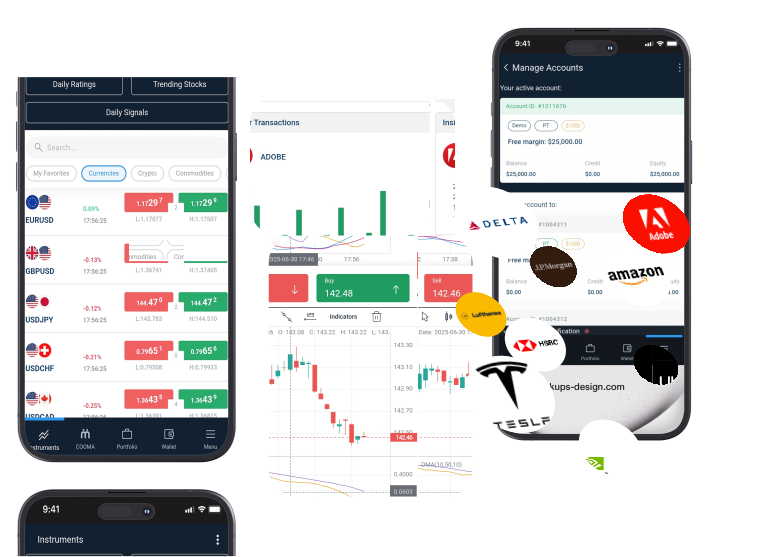
AFAQ Trade, a leading online trading platform in the GCC region, provides comprehensive resources and educational support for traders at all levels. From demo accounts to live webinars and step-by-step guides, AFAQ ensures that learners can grasp complex concepts in a practical and interactive way.
What Are Stock Market Trading Courses?
Stock market trading courses are structured programs designed to teach individuals how to trade and invest in stocks effectively. They cover a wide range of topics, including market analysis, trading strategies, portfolio management, technical analysis, and risk management. The courses are tailored to suit different levels of expertise—from complete beginners to advanced traders seeking to refine their skills.
Courses can be delivered in various formats:
- Online courses with video lectures, interactive quizzes, and assignments.
- Live webinars providing real-time trading demonstrations and Q&A sessions.
- Workshops and bootcamps for hands-on practical experience.
By taking a structured course, traders gain clarity on key concepts such as how to analyze stock price movements, read charts, and identify profitable opportunities. Platforms like AFAQ Trade make it easy to complement these courses with demo trading accounts, allowing learners to apply theoretical knowledge in a risk-free environment.
Importance of Structured Learning in Trading
Learning how to trade in the stock market without guidance is similar to navigating a complex maze without a map. Structured learning provides a framework for understanding the market, making decisions, and managing risk. Here are some key reasons why structured learning is essential:
- Foundation of Knowledge: Structured courses build a solid understanding of market principles, terminology, and strategies.
- Systematic Approach: Learners follow a step-by-step curriculum, reducing confusion and improving confidence.
- Practical Application: Courses often include simulations, exercises, and case studies to bridge theory with real-world trading.
- Avoiding Common Mistakes: Beginner traders are more likely to avoid costly errors when guided by expert-led courses.
- Staying Updated: Structured programs often incorporate the latest market trends, trading tools, and regulatory updates, ensuring traders remain informed.
With platforms like AFAQ Trade, traders have access to resources that enhance structured learning, including trading webinars, educational articles, and analytical tools, which can be integrated seamlessly with formal stock market courses.
Benefits of Taking a Stock Market Trading Course
Taking a stock market trading course can be a powerful step toward building confidence and clarity in your financial journey. It helps you develop a solid foundation that supports smarter decisions and long-term success in the market.
Building Foundational Knowledge
For beginners, the stock market can seem overwhelming, with complex terminology and market mechanisms. A stock market trading course for beginners equips learners with essential knowledge, such as understanding stock exchanges, market orders, trading instruments, and key investment strategies. Building this foundation helps traders avoid guesswork and trade with confidence.
Understanding Market Analysis
Market analysis is a critical skill for successful trading. Courses teach learners both technical analysis—studying price charts, trends, and patterns—and fundamental analysis, which focuses on evaluating a company’s financial health, earnings reports, and industry trends. Understanding market analysis ensures that traders can make informed, data-driven decisions rather than relying solely on intuition.
Learning Risk Management and Trading Psychology
Risk management is the most overlooked aspect of trading. Courses highlight strategies such as position sizing, setting stop-loss levels, and using leverage responsibly. Additionally, trading psychology—managing emotions like fear and greed—is emphasized to help traders maintain discipline and consistency. Platforms like AFAQ Trade provide tools such as demo accounts and analytics to practice these skills in a controlled environment.
Types of Stock Market Trading Courses
Stock market trading courses come in various formats designed to match different learning styles and goals. They provide a structured path that helps beginners and experienced traders alike deepen their knowledge and sharpen their skills.
Beginner-Level Trading Courses
These courses are designed for individuals with little to no prior knowledge of stock trading. They cover the basics such as what stocks are, how the market operates, and simple trading strategies. Beginners often learn through step-by-step tutorials, video lectures, and practical exercises.
Advanced Trading and Investment Courses
Advanced courses are tailored for experienced traders aiming to refine strategies, improve portfolio performance, and explore complex trading instruments. Topics may include derivatives trading, algorithmic strategies, and advanced risk management techniques.
Technical Analysis and Charting Programs
Technical analysis courses focus on reading charts, identifying patterns, and using indicators to predict price movements. Learners gain expertise in tools like moving averages, Bollinger Bands, RSI, and MACD. These programs are essential for traders who rely heavily on market trends and patterns for decision-making.
Day Trading and Swing Trading Courses
Day trading courses teach traders to execute short-term trades within a single day, capitalizing on intraday price fluctuations. Swing trading programs, on the other hand, focus on holding positions for several days or weeks to capture market swings. Both courses emphasize timing, risk control, and trade execution.
Key Topics Covered in Stock Market Courses
Stock market courses highlight essential concepts that shape a strong understanding of how the financial markets work. They guide learners through the core areas needed to build skill, confidence, and effective trading habits.
Technical and Fundamental Analysis
Most courses provide in-depth lessons on both technical and fundamental analysis. Technical analysis focuses on charts, trend lines, candlestick patterns, and indicators, while fundamental analysis evaluates company performance, financial statements, and macroeconomic factors.
Portfolio Management
Effective portfolio management is crucial for long-term success. Courses teach learners how to diversify investments, balance risk and reward, and optimize asset allocation to achieve financial goals.
Trading Tools and Platforms
Courses often include training on trading platforms and analytical tools. For example, AFAQ Trade provides a user-friendly interface, real-time market data, and analytical resources that complement formal trading education.
Market Indicators and Patterns
Understanding market indicators such as moving averages, support/resistance levels, and candlestick patterns helps traders anticipate market movements. These insights allow for better decision-making and strategic trade execution.
How to Choose the Right Trading Course?
Selecting the right course depends on several factors:
- Skill Level: Beginners should choose introductory courses, while advanced traders may opt for specialized programs.
- Learning Style: Decide between self-paced online courses, live webinars, or interactive workshops.
- Course Content: Ensure the course covers both theoretical and practical aspects, including risk management.
- Accreditation and Reviews: Look for courses with credible instructors and positive learner feedback.
- Integration with Trading Platforms: Courses integrated with platforms like AFAQ Trade provide practical exposure to real market conditions.
Tips for Success in Trading Education
Successful trading education depends on adopting the right mindset and consistent learning habits. With a clear approach and steady practice, learners can build the skills needed to grow confidently in the world of trading.
Practice Through Demo Accounts
Demo accounts allow learners to practice strategies without financial risk. By experimenting with virtual funds, traders can understand stock market trading courses online concepts in real-time. AFAQ Trade offers demo accounts with advanced tools to simulate realistic market conditions.
Continuous Learning and Updates
The stock market is dynamic, and continuous learning is essential. Courses often provide access to updated materials, webinars, and case studies. Staying current ensures traders adapt to changing market trends and regulations.
Joining Trading Communities
Engaging with trading communities helps learners exchange insights, ask questions, and receive mentorship. Social trading platforms and forums offer valuable support to both beginners and advanced traders.
Services Of Afaq
AFAQ Trade is an electronic platform specializing in trading Contracts for Difference (CFDs), with a primary focus on the Gulf markets.
The platform aims to provide a simple, secure, and professional trading experience through platforms such as WebTrader and Mobile App, supported by educational tools like webinars, an academy, demo accounts, and a copy-trading feature.
Licenses and Legal Entity
The platform is owned by Afaq FX Markets (Comoros) LTD, registered in the Comoros.
It is licensed by the MWALI International Services Authority under license number BFX2025079, adding a layer of transparency and reliability for investors.
Key Services
- Trading in forex, stocks, commodities, and indices.
- Islamic accounts are compliant with Sharia.
- Demo account with $25,000 virtual funds for training.
- Advanced analysis tools, live customer support, and competitive trading fees (low spreads).
- Secure deposit and withdrawal procedures.
Account Types
- Basic – Minimum deposit up to $4,999.
- Advanced – From $5,000 to $19,999.
- Premium – $20,000 and above with advanced features.
- Sharia Account – Sharia-compliant, swap-free, with Sharia fees applied after the 4th day.
- Demo – Realistic trading experience with no financial risk.
In Conclusion
Stock market trading courses are an essential investment for anyone serious about succeeding in the financial markets. From foundational knowledge to advanced strategies, these courses equip traders with the skills, discipline, and confidence needed to navigate complex markets. Platforms like AFAQ Trade complement these courses with practical tools, demo accounts, and real-time support, making learning both effective and risk-free.
Whether you are looking for stock market trading courses online, stock market courses for beginners, or the best stock market trading courses, structured education is the key to building consistent profitability in the stock market.
FAQs
How Can I Learn Stock Trading Online?
You can learn through online courses, video tutorials, webinars, and practical exercises using demo accounts on platforms like AFAQ Trade.
Are Stock Market Trading Courses Worth the Money?
Yes, investing in a structured course accelerates learning, reduces costly mistakes, and provides practical skills for long-term profitability.
What Skills Do I Gain from a Stock Trading Course?
Skills include market analysis, risk management, trading psychology, portfolio management, and practical use of trading platforms.
How Long Does It Take to Complete a Stock Market Trading Course?
Course durations vary from a few weeks for beginner programs to several months for advanced courses. Continuous learning is recommended to stay updated.
What Are the Differences Between Beginner and Advanced Trading Courses?
Beginner courses focus on fundamentals and basic trading strategies, while advanced courses cover complex instruments, technical analysis, algorithmic strategies, and sophisticated risk management.