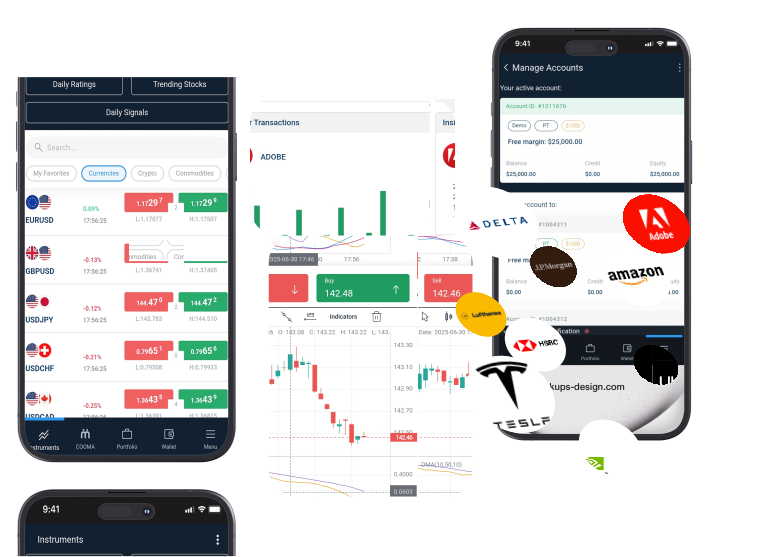
Daily Share Trading: A Guide to Profiting from Short-Term Moves
Daily share trading involves buying and selling stocks within the same trading day to profit from short-term price movements. Unlike long-term investing, positions are opened and closed within hours or even minutes, requiring strong knowledge of market dynamics, technical analysis, and risk management.
The goal is to buy at a lower price and sell at a higher price before the market closes. Success depends on timing, liquidity, and reacting quickly to news and intraday volatility rather than focusing on long-term trends.
Key Characteristics of Daily Share Trading
- Short-term focus: Positions are opened and closed within a single trading day.
- High liquidity: Traders rely on stocks with significant trading volume to ensure smooth execution.
- Technical analysis: Price charts, indicators, and patterns are critical tools for decision-making.
- Leverage and margin: Some traders use margin or leverage to amplify gains, although this significantly increases risk.
- Emotional discipline: Rapid price swings require composure to avoid impulsive decisions.
Why Daily Share Trading Appeals to Traders
- Speed and excitement: The thrill of making quick profits can be addictive for those who enjoy fast-paced environments.
- No overnight risk: Unlike swing trading or investing, daily share trading eliminates exposure to overnight market shifts.
- Potential for high returns: Skilled traders may generate profits from small price movements, but consistent success requires strong discipline and risk management.
- Flexibility: It allows traders to adapt their strategies to real-time market conditions.
- Tax advantages: In some jurisdictions, short-term gains are taxed differently from long-term capital gains, which can be beneficial for traders.
How Does Daily Share Trading Work?
Daily share trading focuses on short-term price moves during market hours. These moves can be influenced by sentiment, economic data, and company news. Traders use AFAQ technical tools like moving averages, the Relative Strength Index (RSI), and volume spikes to spot entry and exit points.
They track pre-market activity and react to live price movements. Many traders close positions before the session ends to avoid holding overnight. Success requires understanding liquidity and how institutional activity can shape intraday trends.
The Attraction of Daily Share Trading
Daily share trading stands out for its ability to generate quick results, which is particularly appealing to traders seeking immediate returns. The online trading platform has made access easier. However, lower barriers do not reduce risk.. Additionally, the strategy aligns well with traders who prefer active engagement over passive investing, as it demands constant vigilance and adaptability.
- Intraday opportunities: Price movements within hours can offer profitable entry and exit points.
- Lower reliance on fundamentals: Technical analysis often takes precedence over financial statements.
- Scalability: Traders can manage multiple positions simultaneously, increasing potential profits.
- Adaptability: Strategies can be adjusted based on real-time market shifts.
- Psychological engagement: The fast-paced nature keeps traders mentally active.
Daily Share Trading Rules and Regulations
Regulatory frameworks vary by country. Rules may cover leverage, short-selling, and (in some markets) pattern day trading. In markets like the U.S., the Financial Industry Regulatory Authority (FINRA) imposes the Pattern Day Trader (PDT) rule, which limits traders with accounts under $25,000 to three day trades per week unless they meet specific criteria. This rule aims to protect inexperienced traders from excessive risk.
- Account size requirements: Some platforms require a minimum balance for daily share trading.
- Leverage limits: Margin trading is often restricted to prevent over-leveraging.
- Short-selling restrictions: Selling stocks short may be prohibited or limited in certain cases.
- Tax obligations: Short-term capital gains are typically taxed at higher rates than long-term investments.
- Brokerage rules: Platforms like afaq enforce their own policies, such as minimum trade sizes or holding periods.
Tools of the Daily Share Trading
Effective daily share trading hinges on the right tools, which range from real-time market data to advanced charting software. Traders rely on platforms that offer low-latency execution, high liquidity, and comprehensive analytical features. For instance, an online trading platform with tools such as Level 2 quotes, time-and-sales data, and customizable technical indicators can provide a competitive edge.
Essential Tools for Daily Share Trading
- Real-time data feeds: Critical for monitoring price movements and volume.
- Technical analysis software: Platforms like Afaq offer customizable charts and indicators.
- News and economic calendars: Tools like Bloomberg or Reuters provide timely updates.
- Trading journals: Used to track trades, analyze mistakes, and refine strategies.
- Risk management tools: Stop-loss orders and portfolio diversifiers help mitigate losses.
How to Choose the Right Platform
- Low latency: Ensure the platform provides fast trade execution.
- Commission structure: Look for minimal or zero fees on intraday trades.
- Liquidity: Higher trading volume means better price execution.
- Analytical features: Advanced charting tools and indicators improve decision-making.
- User experience: A seamless interface reduces errors during rapid trading.
Daily Share Trading Strategies
Successful daily share trading combines technical analysis, market psychology, and strict discipline. One common strategy is scalping, in which traders capture small price moves within seconds or minutes by making multiple quick trades. Momentum trading is another approach that focuses on strong price swings during high-volatility events such as earnings or economic news.
Breakout trading targets stocks moving beyond key support or resistance levels, while reversal trading looks for price extremes likely to change direction. Each method carries different risk and reward levels, so traders should choose strategies that match their risk tolerance and available time.
Common Daily Share Trading Strategies
- Scalping: scalping vs day trading often involves micro-profits from rapid trades.
- Momentum trading: Exploiting stocks with strong upward or downward trends.
- Breakout trading: Entering positions when a stock moves beyond a predefined level.
- Reversal trading: Betting on price corrections after extreme movements.
- Pullback trading: Buying during temporary retracements in an uptrend.
Developing a Personalized Strategy
- Identify your trading style: Are you a scalper, momentum trader, or breakout specialist?
- Set clear entry/exit rules: Define conditions for entering and exiting trades to avoid emotional decisions.
- Backtest your approach: Use historical data to validate your strategy’s effectiveness.
- Manage risk per trade: Never risk more than 1-2% of your capital on a single trade.
- Monitor market conditions: Adjust strategies based on volatility, liquidity, and news events.
Risks of Daily Share Trading
Daily share trading offers quick profit potential but carries serious risks. Overtrading is a common mistake that leads to high fees and emotional burnout. Misusing leverage is another major danger, as it magnifies both gains and losses and can trigger margin calls or forced liquidations.
Market volatility can cause sudden losses, while low liquidity—especially in thinly traded stocks—can lead to unfavorable price movements when entering or exiting positions. Proper risk management is essential to protect capital.
Psychological Risks in Daily Share Trading
- Fear and greed: Emotional reactions to losses or gains can cloud judgment.
- Revenge trading: Attempting to recover losses by taking reckless trades.
- Overconfidence: Believing you can consistently predict market movements.
- Analysis paralysis: Overthinking trades due to indecision.
- Burnout: The constant stress of daily trading can lead to exhaustion.
Mitigating Risks with Proper Techniques
- Use stop-loss orders: Automatically exit trades if prices move against you.
- Limit leverage: Avoid excessive borrowing to prevent catastrophic losses.
- Stick to liquid stocks: Focus on high-volume shares to reduce slippage.
- Avoid overtrading: Execute only high-quality trades to save on fees.
- Stay updated on news: React to market-moving events with caution.
How Much Does the Average Day Trader Make?
Earnings for the average day trader vary greatly based on skill, experience, and discipline. While stories of quick fortunes exist, they’re uncommon. In fact, studies suggest that a large percentage of retail day traders lose money over time. over time due to poor risk management, high costs, and emotional decisions.
Some professional traders report performance targets in favorable conditions. These targets vary widely and are not guaranteed. However, consistent profitability is challenging, and many traders eventually shift to swing trading or long-term investing for more sustainable results.
Factors Influencing Day Trader Earnings
- Market conditions: Bullish or volatile markets favor day traders more than sideways trends.
- Trading volume: Higher liquidity reduces slippage and improves execution.
- Risk management: Traders who limit losses tend to outperform those who don’t.
- Strategy consistency: A well-tested approach yields better results than random trades.
- Emotional control: Discipline in avoiding impulsive decisions is key.
Realistic Expectations for Day Traders
- Start small: Use a demo account or limited capital to practice before scaling up.
- Focus on survival: Many traders fail because they prioritize profits over risk control.
- Track performance: Keep detailed records to identify strengths and weaknesses in your strategy.
- Avoid leverage early: Mastering risk management without borrowed capital is safer.
- Consider alternatives: If daily share trading proves too stressful, explore crypto trading vs long-term investing or other approaches.
Should You Start Daily Share Trading?
Whether daily share trading is right for you depends on your goals, risk tolerance, and time commitment. It demands strong focus, technical skills, and emotional control, making it challenging for beginners. Losses can occur quickly, especially without proper preparation.
Before starting, assess if you can afford potential losses and dedicate hours to market analysis. If you’re risk-averse or short on time, long-term investing or other strategies may be a more suitable choice.
Daily Share Trading Example
Imagine a trader monitoring Tesla stock during pre-market hours. They notice a slight upward trend in the futures market and decide to enter a long position at $200. By mid-morning, the stock rises to $205 due to positive news about battery production. The trader exits the position, locking in a 2.5% profit in just a few hours. This is a simplified example. It shows how daily share trading can depend on quick decisions and real-time reactions.
- Pre-market analysis: Identifying trends before the market opens.
- Entry timing: Buying at a strategic moment to maximize gains.
- Exit discipline: Selling before the market closes to secure profits.
- Profit realization: Small but frequent gains can compound over time.
- Risk control: Using stop-losses to limit potential losses.
Daily Share Trading vs. Options Trading
| Comparison Factor | Daily Share Trading | Options Trading |
| Ownership | Involves buying and selling actual stocks, meaning you own the underlying asset. | Traders speculate on price movements without owning the underlying asset. |
| Capital Requirements | Requires purchasing full shares, which may need higher upfront capital. | Can be cheaper initially due to lower option premiums. |
| Risk Exposure | Losses are limited to the capital invested in the shares. | Can involve significant losses due to leverage; some strategies carry unlimited risk. |
| Time Commitment | Requires active market monitoring during trading hours. | Also requires active monitoring, plus additional strategic planning. |
| Profit Potential | Returns are generally more linear, based on price movement. | Offers potentially higher returns due to leverage, but also higher potential losses. |
| Complexity / Learning Curve | Focuses mainly on price action and technical analysis. | More complex, involving Greeks, time decay, and multiple strategies. |
Why Daily Share Trading Is Controversial
Regulators and financial experts often criticize daily share trading. Frequent transactions can increase short-term volatility and potentially distort prices. The high failure rate among retail traders also raises concerns about the long-term sustainability of the industry.
Critics further compare it to gambling, suggesting that many participants rely more on speculation and short-term luck than on solid analysis and disciplined risk management.
- Market manipulation: Rapid trades can artificially influence price movements.
- High failure rate: Most retail traders lose money over time.
- Emotional stress: The pressure of intraday decisions can lead to psychological strain.
- Regulatory scrutiny: Platforms and brokers monitor excessive trading activity.
- Short-term focus: Critics argue it distracts from long-term wealth-building.
Is Daily Share Trading Profitable?
Profitability in daily share trading depends on market conditions, skill, and discipline. While some traders succeed, many struggle due to emotional decisions and poor timing. Consistent risk management and sticking to a proven strategy are essential for long-term success.
Success Stories vs. Reality
- Success stories: Highlight traders who’ve made millions, but these are often outliers.
- Consistent traders: Those who manage risk well may achieve modest but sustainable gains.
- Market dependence: Profitability fluctuates with economic cycles and volatility.
- Psychological resilience: The ability to remain disciplined in the face of losses is critical.
- Capital preservation: Many traders prioritize avoiding losses over chasing gains.
How to Improve Profitability in Daily Share Trading
- Master technical analysis: Learn to read charts and identify patterns accurately.
- Develop a trading plan: Outline entry, exit, and risk management rules before trading.
- Use daily share trading tips : Focus on high-probability setups and avoid overcomplicating strategies.
- Monitor performance: Track trades to identify mistakes and refine approaches.
- Adapt to market changes: Adjust strategies based on evolving trends and volatility.
FAQs
What Is the Minimum Capital Required for Daily Share Trading?
There is no fixed minimum, but many traders start with $500–$5,000. The required amount depends on broker rules and local regulations.
Can I Do Daily Share Trading Online Without a License?
In most countries, individuals can trade their own money without a license. A license is usually required only if you manage funds for others.
What Are the Most Common Mistakes Beginners Make?
Common mistakes include overtrading, failing to manage risk, trading without a plan, and letting emotions drive decisions.
How Do I Avoid Emotional Trading in Daily Share Trading?
Use a clear trading plan, set stop-loss orders, manage risk effectively, and avoid impulsive decisions driven by fear or greed.
Is Daily Share Trading Legal in All Countries?
Daily share trading is legal in most countries, but regulations vary. Always check local financial laws and broker requirements before trading.