Which Market Is Best for Trading for Beginners?
Choosing the right financial market is an essential step for every trader, as each market comes with different opportunities, risks, and trading conditions. Many traders often ask which market is best for trading, but the answer usually depends on factors such as liquidity, volatility, trading costs, and personal trading goals. While some traders prefer the fast-moving nature of forex and cryptocurrencies, others choose stocks or commodities for more stable and long-term investment opportunities. Understanding the strengths and characteristics of each market can help traders build more effective strategies and make informed trading decisions.
Which Commodities Should You Start With?
Choosing the right commodities to trade is a critical first step for any trader looking to enter the market. Beginners often make the mistake of jumping into complex or highly volatile assets without understanding the fundamentals. The best commodities for new traders typically include gold, silver, oil, and agricultural products like wheat or coffee. These assets are widely traded, have transparent pricing, and offer liquidity, making them ideal for learning the ropes.
Gold, for instance, is a safe-haven asset that tends to perform well during economic uncertainty. It’s also highly liquid, meaning you can buy or sell it quickly without significantly affecting its price. Silver, while more volatile than gold, offers opportunities for higher returns and is often used as an industrial metal. Oil, particularly crude oil, is another popular choice due to its global demand and influence on geopolitical events. Agricultural commodities like wheat or coffee are also great starting points because their prices are driven by supply and demand factors that are easier to analyze for beginners.
How to Choose the Best Trading Market as a Beginner?
Choosing which market is best for trading is an important step for beginners who want to build a successful trading journey. Since every financial market comes with different risks, opportunities, and trading styles, selecting the right one depends on your goals, experience level, and preferred trading approach.
- Understanding your trading personality helps determine whether you prefer short-term or long-term trading strategies.
- Day traders often choose forex or cryptocurrencies because of their high volatility and fast market movements.
- Swing traders may prefer stocks or commodities where trends develop over longer periods.
- Markets like forex and stocks provide extensive educational resources, including tutorials, webinars, and demo accounts.
- Cryptocurrencies may offer higher profit potential but usually involve greater risks and a steeper learning curve.
- Trading costs vary between markets, as some charge commissions while others rely mainly on spreads.
- Exploring different trading styles through platforms like Afaq platform can help beginners identify the market that best suits their needs.
Which Market Is Best for Trading?
Determining which market is best for trading depends on several factors, including your risk tolerance, trading goals, and the time you can commit to analyzing the market. Below, we’ll break down the most popular trading markets to help you decide which one aligns best with your strategy.
The Forex Market
The forex (foreign exchange) market is the largest and most liquid financial market in the world, with an average daily trading volume exceeding $6 trillion. This market involves trading currency pairs, such as EUR/USD or USD/JPY, and operates 24 hours a day, five days a week. For beginners, forex offers several advantages, including low barriers to entry, high liquidity, and the ability to trade on margin, which allows you to control larger positions with a smaller initial investment.
One of the best things to trade in forex for beginners is major currency pairs, as they tend to have tighter spreads and lower volatility compared to exotic pairs. Major pairs like EUR/USD, USD/JPY, and GBP/USD are also highly liquid, meaning you can enter and exit trades with minimal slippage. Additionally, forex markets are influenced by a wide range of factors, including economic indicators, geopolitical events, and central bank policies, which can provide ample opportunities for analysis and trading strategies.
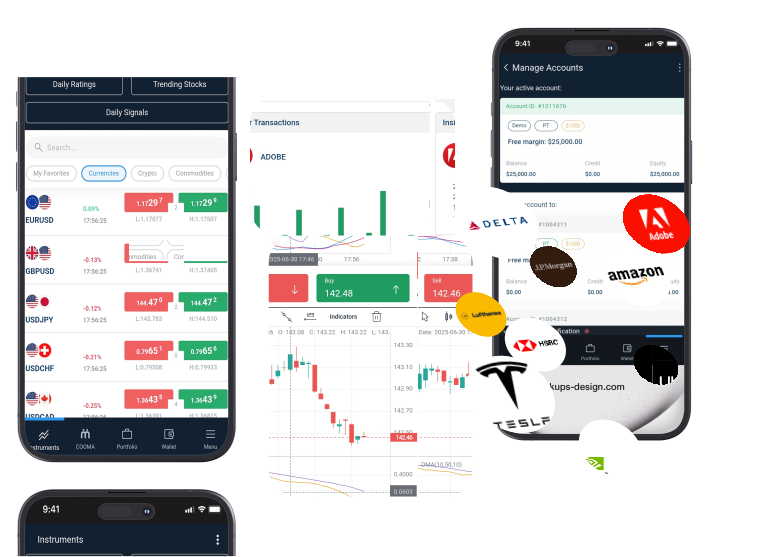
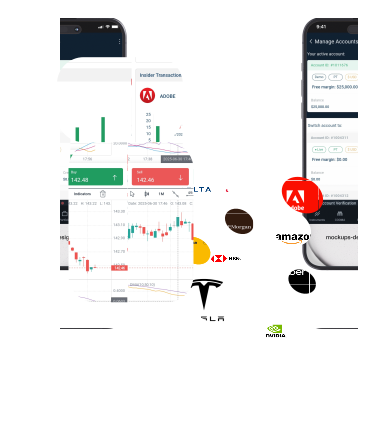
To get started in forex trading, it’s essential to use a reliable trading market app that offers demo accounts for practice. Platforms like MetaTrader 4 or MetaTrader 5 are popular choices among beginners due to their user-friendly interfaces and advanced trading tools. At Afaq platform, you can find step-by-step guides on how to set up a forex trading account, choose a broker, and develop a trading plan.
The Stock Market
The stock market is another popular choice for beginners, offering a wide range of assets to trade, from individual stocks to exchange-traded funds (ETFs). Stocks represent ownership in a company, and their prices fluctuate based on factors like earnings reports, market sentiment, and industry trends. While stocks can be highly profitable, they also come with risks, including market volatility and company-specific risks.
For beginners, trading individual stocks can be challenging due to the need for in-depth trading market analysis and research. However, ETFs provide a more diversified approach, allowing you to invest in a basket of stocks with a single trade. ETFs are also generally more liquid and have lower fees compared to individual stocks, making them an attractive option for new traders.
If you’re interested in the stock market, it’s crucial to start with a well-regulated brokerage platform that offers educational resources and tools for technical and fundamental analysis. Many platforms also provide paper trading accounts, where you can practice trading with virtual money before risking real capital. At Afaq, you’ll find comprehensive reviews of the best stock trading platforms for beginners.
The Commodity Market
The commodity trading involves trading physical goods such as metals, energy, and agricultural products. Commodities are often categorized into two types: hard commodities, such as gold, oil, and natural gas, and soft commodities, such as coffee, sugar, and wheat. Trading commodities can be highly profitable, especially if you have a good understanding of supply and demand dynamics, geopolitical events, and economic trends.
For beginners, the commodity market can be complex due to its sensitivity to external factors like weather conditions, political instability, and global economic trends. However, commodities like gold and oil are relatively easier to trade because their price movements are influenced by well-understood factors. Gold, for example, is often seen as a hedge against inflation and economic uncertainty, while oil prices are closely tied to geopolitical events and global demand.
If you’re considering trading commodities, it’s essential to use a platform that offers access to futures contracts or CFDs (contracts for difference). These financial instruments allow you to speculate on price movements without owning the underlying asset. At Afaq, you can learn about the different types of commodity contracts and how to develop a trading strategy tailored to this market.
Global Indices Market
The global indices market involves trading baskets of stocks that represent a specific sector, industry, or country. Popular indices include the S&P 500, Dow Jones Industrial Average, and NASDAQ. Trading indices allows you to gain exposure to a diversified portfolio of stocks with a single trade, reducing the risk associated with individual stock picks.
Indices are particularly appealing to beginners because they offer stability and lower volatility compared to individual stocks. They are also highly liquid, meaning you can enter and exit trades quickly without significant price impact. Additionally, indices are influenced by macroeconomic factors, such as interest rates, GDP growth, and employment data, which can provide clear trading opportunities based on fundamental analysis.
To trade indices, you’ll typically use CFDs or index futures. These instruments allow you to speculate on the price movements of the underlying index without owning the stocks directly. At Afaq, you can explore different strategies for trading indices and learn how to use technical indicators to identify trends.
ETFs (Exchange Traded Funds)
ETFs are investment funds that trade on stock exchanges and are designed to track the performance of a specific index, sector, commodity, or asset class. They offer the benefits of diversification and liquidity, making them an excellent choice for beginners who want to minimize risk while still participating in the market.
One of the key advantages of ETFs is their flexibility. You can trade them like stocks, meaning you can buy and sell them throughout the trading day at market prices. ETFs also tend to have lower expense ratios compared to mutual funds, making them a cost-effective option for long-term investors. Additionally, there are ETFs available for almost every asset class, including stocks, bonds, commodities, and even cryptocurrencies.
ETFs provide an accessible entry point for beginners due to their diversification benefits and lower risk exposure compared to individual stocks or commodities. Unlike mutual funds, which typically trade once per day at their net asset value (NAV), ETFs trade intraday on stock exchanges, offering the same flexibility as stocks. This makes them ideal for traders who want to capitalize on short-term price movements while still benefiting from broad market exposure.
Why ETFs Are Ideal for Beginners:
- Instant Diversification: A single ETF can represent hundreds or thousands of underlying assets, reducing the risk of losing money on a single investment.
- Lower Minimum Investment: Unlike mutual funds, which often require higher minimum investments, ETFs can be purchased for as little as the price of one share.
- Transparency and Liquidity: ETFs disclose their holdings daily, and their liquidity ensures tight bid-ask spreads, making it easier to enter and exit trades.
- Tax Efficiency: ETFs generally generate fewer capital gains distributions compared to mutual funds, which can be advantageous for tax-conscious traders.
Types of ETFs to Consider as a Beginner:
- Index ETFs: Track major indices like the S&P 500 (e.g., SPY) or NASDAQ (e.g., QQQ). These are great for long-term investors who want to mirror market performance.
- Sector-Specific ETFs: Focus on industries like technology (e.g., XLK), healthcare (e.g., XLV), or energy (e.g., XLE). These are useful for traders who want to capitalize on sector trends.
- Commodity ETFs: Provide exposure to metals such as gold via GLD, oil via USO, or agricultural products such as corn via CORN without the need for futures contracts.
- Bond ETFs: Offer exposure to government or corporate bonds, such as AGG for aggregate bonds. These are ideal for conservative traders looking for steady income.
- International ETFs: Allow exposure to foreign markets such as EFA for developed markets and VWO for emerging markets. These are useful for diversifying beyond domestic assets.
How to Trade ETFs Effectively?
- Use a Reliable Broker: Ensure your trading platform supports ETF trading with low commissions and real-time data.
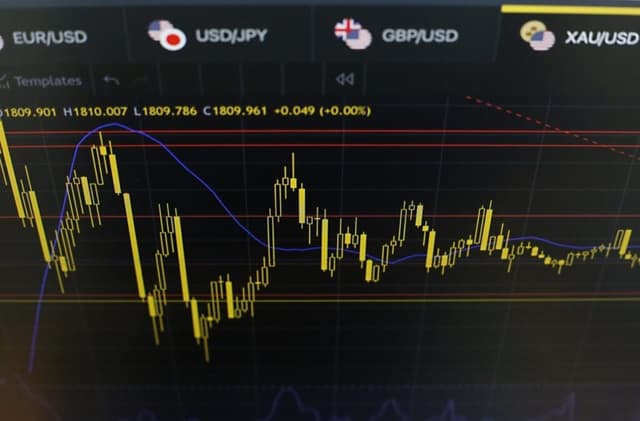
- Leverage Technical Analysis: Since ETFs trade like stocks, you can use chart patterns, moving averages, and volume indicators to identify entry and exit points.
- Start with Leveraged ETFs Cautiously: While leveraged ETFs such as 2x or 3x exposure can amplify gains, they also increase risk. Beginners should avoid these until they gain more experience.
- Monitor Expense Ratios: Lower expense ratios mean lower costs over time, which is especially important for long-term investors.
At Afaq, you can find detailed guides on how to screen ETFs, analyze their performance, and integrate them into a well-rounded trading strategy.
The Cryptocurrency Market
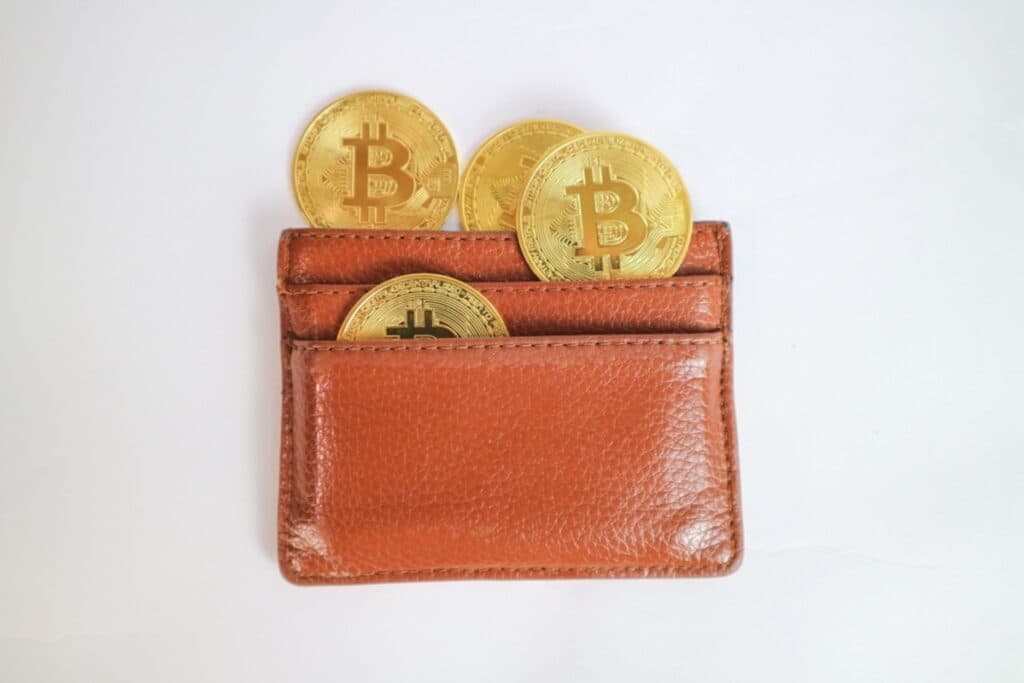
The cryptocurrency market is one of the most volatile and rapidly evolving trading arenas, offering both high rewards and significant risks. Unlike traditional markets, cryptocurrencies operate 24/7, are decentralized, and are influenced by factors like blockchain technology advancements, regulatory news, and market sentiment. For beginners, cryptocurrencies can be both exciting and intimidating, but with the right approach, they can be a valuable addition to a diversified portfolio.
Key Characteristics of the Cryptocurrency Market:
- High Volatility: Prices can swing dramatically within hours, offering opportunities for short-term traders but also posing significant risks.
- Decentralization: Cryptocurrencies are not controlled by governments or central banks, making them immune to traditional monetary policies.
- Liquidity Varies by Pair: Major cryptocurrencies like Bitcoin (BTC) and Ethereum (ETH) are highly liquid, while smaller altcoins may have lower trading volumes.
- 24/7 Trading: Unlike stock markets, which have set hours, cryptocurrencies can be traded around the clock, providing flexibility for global traders.
Best Cryptocurrencies for Beginners:
- Bitcoin (BTC): The most established cryptocurrency, often referred to as “digital gold.” It’s less volatile than many altcoins and widely accepted as a store of value.
- Ethereum (ETH): The second-largest cryptocurrency by market cap, known for its smart contract functionality and strong developer community.
- Stablecoins (USDT, USDC, DAI): Pegged to stable assets like the US dollar, these are ideal for traders who want to avoid volatility while still participating in the crypto ecosystem.
- Altcoins with Strong Use Cases: Cryptocurrencies like Solana (SOL), Cardano (ADA), or Polkadot (DOT) offer innovative features but come with higher risk due to their volatility.
How to Trade Cryptocurrencies Safely:
- Use Reputable Exchanges: Platforms like Binance, Coinbase, or Kraken offer secure trading environments with regulatory oversight.
- Start with Small Positions: Due to the high volatility of cryptocurrencies, it’s wise to begin with small trades to manage risk.
- Diversify Your Portfolio: Avoid putting all your capital into a single cryptocurrency. Spread investments across BTC, ETH, and stablecoins.
- Stay Informed on News and Trends: Cryptocurrency prices are highly sensitive to news, such as regulatory announcements, technological upgrades, or macroeconomic events.
- Secure Your Investments: Use hardware wallets or cold storage for long-term holdings to protect against hacking risks.
At Afaq, you can explore beginner-friendly strategies for trading cryptocurrencies, including how to read crypto charts and identify trends using technical analysis tools.
FAQs
What is Trading?
Trading is the process of buying and selling financial assets such as stocks, forex, commodities, or cryptocurrencies to profit from price movements. Traders analyze market trends and use different strategies to enter and exit positions at the right time. The main goal of trading is to generate returns while managing risk effectively.
What is a Market in Trading?
A market in trading refers to the environment where buyers and sellers exchange financial assets. Different markets include forex, stocks, commodities, indices, and cryptocurrencies, each with unique characteristics and trading conditions. Understanding how each market operates helps traders choose the one that best fits their goals and experience level.
How Does Execution Really Change Between Markets?
Execution differs between markets based on liquidity, volatility, trading hours, and the type of broker or exchange being used. For example, forex markets usually offer faster execution due to high liquidity, while stocks or cryptocurrencies may experience slippage during volatile conditions. These differences can directly affect trade speed, pricing, and overall trading performance.