What Is Drawdown in Trading and Why Does It Matter?
Understanding risk is one of the most important aspects of becoming a successful trader in financial markets. Many traders search for what is drawdown in trading because it directly reflects the declin٠e in account value during losing periods. Drawdown is considered a key metric for evaluating trading performance, risk management, and strategy stability over time. A high drawdown may indicate excessive risk exposure, while a controlled drawdown often reflects disciplined trading practices. Learning how drawdown works can help traders protect their capital and make more informed trading decisions.
What Is Drawdown in Trading?
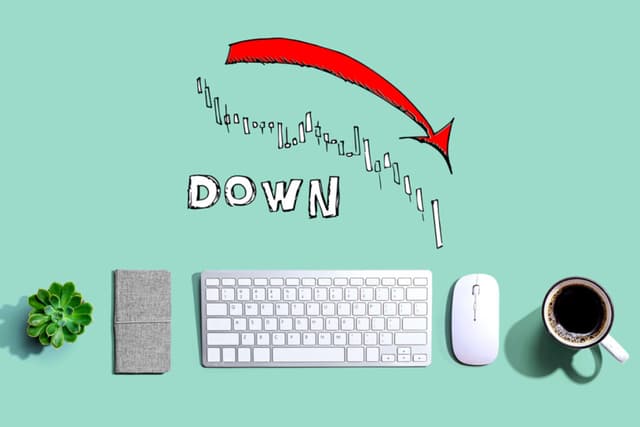
Understanding what is drawdown in trading is is fundamental for any trader or investor looking to navigate the volatile world of financial markets. At its core, drawdown refers to the peak-to-trough decline in the value of an account or portfolio before it recovers to a new peak. It’s a critical metric that measures risk exposure and helps traders assess potential losses during market downturns. For beginners, this concept might seem intimidating, but grasping its nuances can significantly improve decision-making and risk management strategies. Afaq provides traders with the tools and educational resources to explore how drawdown impacts their strategies, especially in high-risk environments like forex or futures trading.
The significance of drawdown extends beyond simple loss calculation — it reveals how resilient a trading strategy is under adverse conditions. For instance, a trader might experience a 20% drawdown before their account recovers, which could take months or even years, depending on market conditions. This metric is particularly relevant in drawdown in forex trading, where currency fluctuations can lead to rapid declines. Traders must differentiate between temporary drawdowns and permanent losses, as the former can be recovered with the right approach, while the latter indicates a fundamental flaw in the strategy.
How Drawdown Works in Trading Accounts?
To fully comprehend what a drawdown in trading is, it’s essential to visualize how it manifests in a trading account. Imagine a trader starts with a $10,000 balance and, after a series of successful trades, reaches a peak of $15,000. However, due to a series of losing trades, the account value drops to $12,000 before recovering to $14,000. The drawdown here is calculated from the peak ($15,000) to the lowest point ($12,000), resulting in a $3,000 decline or a 20% drawdown relative to the peak.
- Initial Peak: The highest account balance before a decline.
- Lowest Point: The trough reached after a series of losses.
- Recovery Point: The balance after the account recovers to a new peak.
- Drawdown Percentage: The difference between the peak and trough, expressed as a percentage of the peak.
Understanding these stages helps traders anticipate potential risks and adjust their strategies accordingly. For instance, a trader might set stop-loss orders to limit drawdown or diversify their portfolio to mitigate losses during volatile periods.
Types of Drawdown in Trading
Not all drawdowns are created equal. Traders encounter different types of drawdowns, each with unique implications for their strategies. Recognizing these variations is key to managing risk effectively.
Absolute Drawdown
Absolute drawdown measures the total decline in an account’s value from its peak to its lowest point, regardless of recovery. For example, if an account peaks at $20,000 and drops to $15,000 before recovering to $18,000, the absolute drawdown is $5,000. This type of drawdown is straightforward but doesn’t account for the account’s ability to recover.
- Absolute drawdown focuses on the raw monetary loss.
- It’s commonly used in what is drawdown in banking to assess portfolio performance.
- Traders use it to evaluate the worst-case scenario without considering recovery.
- It’s less informative for strategies that rely on rebound potential.
Relative Drawdown
Relative drawdown expresses the decline as a percentage of the peak balance. Using the same example, a $5,000 drop from a $20,000 peak results in a 25% relative drawdown. This metric provides a standardized way to compare drawdowns across different account sizes and markets.
- Percentage-Based Calculation: Makes it easier to compare drawdowns in different contexts.
- Use in Risk Assessment: Helps traders set consistent risk thresholds.
- Application in Forex: Critical in understanding what is drawdown in forex trading, where leverage amplifies losses.
- Strategic Adjustments: Allows traders to adjust position sizes based on relative risk.
Maximum Drawdown
Maximum drawdown refers to the largest decline an account experiences from peak to trough over a specific period. It’s a critical metric for evaluating the worst-case scenario a trader might face. For instance, a trading strategy might have a maximum drawdown of 30% over a year, meaning the account could lose up to 30% of its value before recovering.
- Historical Performance: Indicates how a strategy has performed in past downturns.
- Risk Tolerance: Helps traders align their strategies with their risk appetite.
- Backtesting: Used to test strategies under extreme market conditions.
- Forecasting: Provides insights into potential future losses.
Understanding these types of drawdowns equips traders with the tools to assess their strategies more accurately and make informed decisions. Afaq trade offers analytical tools that help traders monitor all three types of drawdown in real time, enabling more proactive risk management.
Formula for Calculating Drawdown
Calculating drawdown is a straightforward process, but accuracy is crucial for effective risk management. The drawdown formula varies slightly depending on whether you’re measuring absolute or relative drawdown.
Absolute Drawdown Formula
Absolute drawdown is calculated as:
Absolute Drawdown = Peak Balance – Lowest Balance
Example:
- Peak Balance = $10,000
- Lowest Balance = $7,500
- Absolute Drawdown = $10,000 – $7,500 = $2,500
This formula is simple, but it doesn’t provide context about the severity of the decline relative to the account size.
Relative Drawdown Formula
Relative drawdown is expressed as a percentage and calculated as:
Relative Drawdown (%) = (Peak Balance – Lowest Balance) ÷ Peak Balance × 100
Example:
- Relative Drawdown = ($10,000 – $7,500) ÷ $10,000 × 100 = 25%
This percentage is invaluable for comparing drawdowns across different trading accounts and strategies.
How to Calculate Drawdown in Trading?
To apply these formulas effectively, traders should:
- Track their account balance daily or after each trade.
- Identify the peak balance before any significant decline.
- Record the lowest balance reached after the decline.
- Plug the values into the appropriate formula.
Traders often use trading software or spreadsheets to automate these calculations and monitor drawdowns in real time. Afaq provides built-in tracking tools that simplify this process and keep traders informed of their drawdown levels at every stage.
Why Drawdown Matters to Traders and Investors?
Drawdown is more than just a numerical metric — it’s a reflection of a trader’s ability to withstand market volatility. Understanding its importance can mean the difference between success and failure in trading.
Risk Management
Drawdown serves as a barometer for risk exposure. A high drawdown indicates that a strategy may not be robust enough to handle adverse market conditions. Traders who ignore drawdown metrics risk overexposing themselves to losses, which can erode capital quickly. For example, a trader with a 50% drawdown may need to recover 100% of their losses just to break even, highlighting the compounding effect of losses.
Psychological Impact
The emotional toll of a drawdown cannot be overstated. Experiencing significant drawdowns can lead to panic selling, revenge trading, or abandoning a strategy prematurely. Traders must develop discipline to stick to their plans, even during prolonged drawdown periods. Afaq emphasizes the importance of mental resilience in trading, as drawdowns can test a trader’s patience and confidence in equal measure.
Strategy Evaluation
Drawdown is a litmus test for trading strategies. A strategy that consistently results in high drawdowns may not be sustainable in the long run. Traders should evaluate whether the potential rewards justify the risk of significant drawdowns. For instance, a strategy with a 30% maximum drawdown but a 50% annual return might be acceptable to some traders, while others may prefer lower-risk strategies with smaller drawdowns.
Capital Preservation
Preserving capital is a primary goal for most traders. Drawdown metrics help identify strategies that protect capital during downturns. For example, in what is drawdown in a funded account, sponsors prioritize strategies with lower drawdowns to minimize the risk of losing their investment. Similarly, in what is drawdown in forex trading, where leverage can amplify losses, traders must choose strategies that limit drawdown to sustainable levels.
Best Strategies to Reduce Trading Drawdown
Reducing drawdown is a top priority for traders aiming to preserve capital and achieve long-term success. While no strategy can eliminate drawdown, certain approaches can significantly mitigate its impact.
1. Position Sizing and Risk Management
Proper position sizing is the foundation of reducing drawdown. Traders should never risk more than 1–2% of their account balance on a single trade to avoid catastrophic losses.
- Fixed Fractional Position Sizing: Allocate a fixed percentage of the account balance to each trade (e.g., 1% per trade).
- Kelly Criterion: A mathematical formula to determine the optimal position size based on win rate, average win, and average loss.
- Volatility-Based Position Sizing: Adjust position sizes based on the volatility of the underlying asset (e.g., smaller positions in high-volatility markets).
- Stop-Loss Discipline: Always use stop-loss orders to cap losses on individual trades, preventing small losses from turning into large drawdowns.
2. Diversification Across Assets and Strategies
Diversification spreads risk across multiple assets, reducing the impact of a single drawdown event. A well-diversified portfolio is less likely to experience extreme declines.
- Asset Class Diversification: Include stocks, bonds, commodities, forex, and cryptocurrencies to balance risk exposure.
- Strategy Diversification: Combine trend-following, mean-reversion, and counter-trend strategies to offset losses in one area with gains in another.
- Correlation Awareness: Avoid over-diversifying with highly correlated assets (e.g., multiple tech stocks), as they may move in tandem during downturns.
- Geographic Diversification: Trade assets from different regions to mitigate regional market risks (e.g., U.S. stocks vs. European indices).
3. Stop-Loss and Take-Profit Orders
Stop-loss and take-profit orders are essential tools for controlling drawdown. They automate exit strategies, preventing emotional decisions during volatile markets.
- Trailing Stop-Loss: Locks in profits while allowing the trade to remain open as long as the price moves favorably.
- Fixed Percentage Stop-Loss: Sets a predetermined percentage loss (e.g., 2%) to exit the trade automatically.
- Time-Based Stop-Loss: Exits the trade after a specified period, regardless of price movement.
- Volatility-Based Stop-Loss: Adjusts stop-loss levels based on the asset’s average true range (ATR) to account for market volatility.
4. Hedging and Correlation Trading
Hedging involves taking offsetting positions to reduce exposure to drawdowns. For example, a trader shorting a stock might hedge by buying put options to limit downside risk.
- Pairs Trading: Exploit correlations between two related assets (e.g., buying Apple while shorting Microsoft if they are expected to move in tandem).
- Options Hedging: Use options like straddles or collars to cap losses while maintaining upside potential.
- Inverse ETFs: Trade inverse ETFs to profit from market declines, effectively hedging against drawdowns.
- Futures Hedging: Use futures contracts to offset losses in spot markets (e.g., hedging a stock portfolio with S&P 500 futures).
5. Backtesting and Strategy Optimization
Before deploying a strategy in live markets, traders should backtest it using historical data to assess its drawdown characteristics. Optimization can help refine the strategy to reduce the maximum drawdown.
- Historical Data Analysis: Test the strategy on past market conditions to identify potential weaknesses.
- Monte Carlo Simulation: Model thousands of possible market scenarios to estimate drawdown probabilities.
- Walk-Forward Testing: Validate the strategy’s performance across different time periods to ensure consistency.
- Parameter Optimization: Adjust strategy parameters (e.g., entry/exit rules, position sizes) to minimize drawdown while maintaining profitability.
Afaq’s back testing environment allows traders to rigorously stress-test their strategies across multiple market cycles before committing real capital, significantly reducing the risk of unexpected drawdowns in live trading.
6. Psychological Discipline and Trade Journaling
Emotional discipline is critical in managing drawdown. Traders who panic during drawdowns often make impulsive decisions that worsen losses.
- Trade Journaling: Record every trade, including emotions, to identify patterns that lead to drawdowns.
- Predefined Rules: Follow a trading plan with clear entry, exit, and risk management rules to avoid emotional trading.
- Mindfulness and Meditation: Develop mental resilience to stay calm during drawdown periods.
- Peer Accountability: Join trading communities (e.g., forums, mentorship programs) to stay accountable and learn from others’ experiences.
7. Leverage Management
Leverage amplifies both gains and losses, making it a double-edged sword. Excessive leverage can lead to rapid drawdowns, especially in volatile markets.
- Low-Leverage Strategies: Prefer lower leverage (e.g., 1:10 or 1:20) to reduce the risk of margin calls.
- Leverage Adjustment: Reduce leverage during high-volatility periods and increase it in stable markets.
- Margin Requirements: Always account for margin calls, which can force liquidation and exacerbate drawdowns.
Leverage considerations across different markets:
- Forex: Leverage can range from 1:10 to 1:500; use caution in what is a drawdown in forex trading.
- Stocks: Margin trading allows leverage but comes with higher risk.
- Crypto: Exchanges often offer high leverage (e.g., 1:100), increasing drawdown potential significantly.
FAQs
How does drawdown affect trading psychology?
Drawdown can create emotional pressure on traders by increasing fear, stress, and self-doubt during losing periods. Large drawdowns often lead to impulsive decisions such as overtrading or abandoning trading strategies too quickly. Managing emotions and maintaining discipline are essential for handling drawdown effectively in the financial markets.
Is drawdown the same as a trading loss?
Drawdown is not the same as a trading loss because it measures the decline in account value from a peak to a lower point over time. A trading loss refers to a single losing trade, while a drawdown reflects the cumulative impact of multiple losses on overall account performance. Understanding this difference helps traders evaluate risk more accurately.
Which trading strategies help minimize drawdown?
Risk management strategies such as setting stop-loss orders, using proper position sizing, and maintaining favorable risk-to-reward ratios can help reduce drawdown. Diversifying trades across different assets and avoiding excessive leverage also lowers exposure to large account declines. Consistent trading plans and disciplined execution are key factors in controlling drawdown levels.