Trading Markets Explained for Modern Traders
In today’s fast-moving financial world, trading markets are central to how individuals, institutions, and governments manage wealth. With the rise of online platforms, access to global markets has become easier than ever. AFAQ Trade has emerged as a trusted partner, helping traders explore opportunities while managing risks effectively.
Whether you are experienced or new to investing, understanding the types of markets and how they work is key to making informed decisions. With reliable platforms like AFAQ, navigating the financial landscape becomes simpler, safer, and more transparent for investors at every stage.
What Are Trading Markets?
Trading markets are platforms, physical or digital, where buyers and sellers meet to exchange financial instruments such as stocks, currencies, commodities, cryptocurrencies, and bonds. They form the backbone of the global economy by facilitating liquidity, price discovery, and efficient allocation of capital.
Understanding what trading markets mean helps new and professional investors recognise their role in financial planning and wealth management. For instance, someone engaged in currency market trading is operating in one of the largest and most liquid markets worldwide. In contrast, share market trading involves buying and selling company stocks for long-term growth or short-term profit.
Importance of Trading Markets in the Global Economy
The global economy depends heavily on trading markets. They provide a mechanism for businesses to raise funds, governments to issue debt, and individuals to invest and grow wealth. More importantly, they allow for:
- Liquidity: Ensuring that assets can be quickly bought or sold without significant price changes.
- Price discovery: Helping investors understand the fair value of assets.
- Risk management: Allowing traders to hedge against adverse price movements.
- Capital formation: Supporting businesses and governments in raising money for growth and development.
Platforms like AFAQ Trade add value by connecting regional investors to global opportunities while ensuring compliance, transparency, and user-friendly access.
Types of Financial Markets
Financial markets play a vital role in the global economy by connecting investors, institutions, and businesses. They serve as platforms where capital, assets, and opportunities meet.
Stock Market
The stock market is one of the most recognisable trading markets. It allows investors to purchase shares of companies, making them partial owners. Share market trading remains attractive for those seeking dividends, capital appreciation, and long-term growth. Share market brokers play an essential role by facilitating these trades.
Forex Market
The foreign exchange (Forex) market is the largest financial market, with trillions of dollars traded daily. Currency market trading gives investors exposure to global currencies, allowing them to profit from exchange rate fluctuations. With platforms like AFAQ offering advanced tools, forex trading has become more accessible to retail investors.
Cryptocurrency Market
The cryptocurrency market has exploded in popularity, introducing a new era of trading markets. Investors can buy and sell digital currencies like Bitcoin, Ethereum, and others through exchanges or CFDs (Contracts for Difference). AFAQ Trade provides an advanced cryptocurrency trading platform, enabling traders to explore digital assets with ease and security.
Commodities Market
The commodities market is a global marketplace where raw materials and primary agricultural products are bought, sold, and traded. It plays a crucial role in the world economy by setting prices for essential goods and enabling producers, consumers, and investors to manage risks and hedge against price fluctuations.
There are two main types of commodities:
- Hard commodities: Natural resources that must be mined or extracted.
- Soft commodities: Agricultural products or livestock
Indices Market
Indices track the performance of groups of stocks, such as the S&P 500 or FTSE 100. They allow investors to trade entire sectors or economies with one position.
- A stock index tracks the value of a group of stocks to show how a specific market or segment is performing.
- Examples include:
- – tracks 500 large-cap U.S. companies.
- – 30 major U.S. industrial companies.
- – focuses on U.S. tech companies.
- – tracks top Japanese companies.
- – top 100 companies listed on the.
Bond Market
The is a financial market where investors buy and sell debt securities issued by governments, corporations, or other entities. It provides regular interest payments and returns the principal at maturity, making it a key source of stable income and lower-risk investment compared to stocks.
ETFs (Exchange-Traded Funds) Market
ETFs provide diversified exposure to stocks, bonds, or commodities. They are traded like stocks but represent a collection of assets.
Derivatives Market
Derivatives include futures, options, and CFDs. These instruments derive their value from underlying assets, allowing investors to hedge or speculate.
How to Choose a Trading Market?
Choosing the right trading market depends on your financial goals, risk tolerance, and expertise. For instance:
- If you prefer stability, the bond market may suit you.
- For high liquidity and global exposure, the forex and cryptocurrency markets are ideal.
- For growth and dividends, stock markets are attractive.
Platforms like AFAQ simplify this decision-making process by offering a range of markets within a single interface, making diversification easy.
How to Trade in Different Markets?
Trading strategies vary depending on the market:
- In stock markets, investors may rely on fundamental analysis of company earnings.
- In forex, traders use technical analysis and macroeconomic data.
- In crypto, trends and blockchain technology influence decision-making.
- In commodities, supply-demand dynamics and geopolitical events are key.
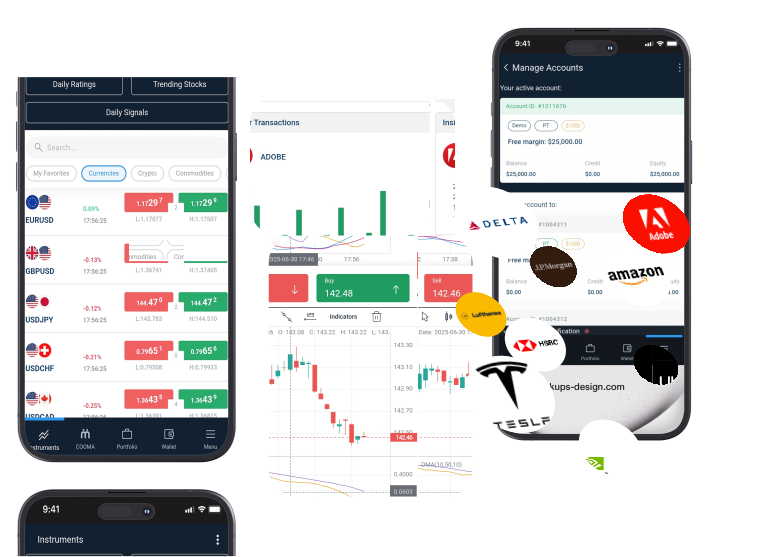
AFAQ supports multiple strategies with advanced charting tools, live signals, and educational resources.
Factors Influencing Trading Markets
Several factors impact trading markets, including:
- Economic indicators such as GDP growth, unemployment, and inflation.
- Government policies on taxation, interest rates, and regulation.
- Global events like wars, pandemics, or political instability.
- Investor sentiment is influenced by news and market psychology.
Understanding these influences is crucial for successful trading. AFAQ provides real-time analysis and market insights to help traders stay informed.
Risks and Challenges in Trading Markets
While opportunities in trading markets are vast, risks cannot be ignored. These include:
- Market volatility leading to sudden losses.
- Over-leveraging in forex or cryptocurrency trading.
- Lack of knowledge or poor risk management.
- Cybersecurity threats in online trading.
AFAQ minimises risks by offering secure platforms, transparent policies, and educational content to empower traders.
Best Practices for Successful Trading
To succeed in trading markets, traders should:
- Develop a clear trading strategy.
- Diversify investments across asset classes.
- Use stop-loss orders to manage risks.
- Stay updated with market news and analysis.
- Avoid emotional trading.
- Start small and scale as experience grows.
AFAQ’s demo account helps beginners practice strategies without financial risk.
Example of Leading Trading Partners with AFAQ
AFAQ has emerged as a trusted partner in the Gulf region, providing access to global trading markets with:
- Licenses from MWALI International Services Authority.
- Secure platforms like WebTrader and Mobile App.
- Multiple account types, including Islamic (Sharia-compliant) accounts.
- Advanced trading tools, copy trading, and real-time analytics.
By combining transparency, education, and security, AFAQ sets itself apart from many other online brokers.
Services Of Afaq
AFAQ Trade is an electronic platform specialized in trading Contracts for Difference (CFDs), with a primary focus on the Gulf markets.
The platform aims to provide a simple, secure, and professional trading experience through platforms such as WebTrader and Mobile App, supported by educational tools like webinars, an academy, demo accounts, and a copy-trading feature.
Licenses and Legal Entity
The platform is owned by Afaq FX Markets (Comoros) LTD, registered in the Comoros.
It is licensed by the MWALI International Services Authority under license number BFX2025079, adding a layer of transparency and reliability for investors.
Key Services
- Trading in forex, stocks, commodities, and indices.
- Islamic accounts are compliant with Sharia.
- Demo account with $25,000 virtual funds for training.
- Advanced analysis tools, live customer support, and competitive trading fees (low spreads).
- Secure deposit and withdrawal procedures.
Account Types
- Basic – Minimum deposit up to $4,999.
- Advanced – From $5,000 to $19,999.
- Premium – $20,000 and above with advanced features.
- Sharia Account – Sharia-compliant, swap-free, with Sharia fees applied after the 4th day.
- Demo – Realistic trading experience with no financial risk.
Communication Methods
For more details about trading with AFAQ:
- Email: [email protected]
- Website: www.afaq.trade
In Conclusion
Trading markets play a vital role in the global economy, offering opportunities for growth, investment, and financial independence. From stocks and forex to cryptocurrencies and commodities, there are countless paths for investors to explore. The key lies in choosing the right partner to guide you through these opportunities.
With its strong regulatory foundation, cutting-edge platforms, and customer-focused services, AFAQ Trade stands out as your trusted partner in cryptocurrency trading and beyond. Whether you are a beginner or an experienced investor, AFAQ equips you with the knowledge, tools, and confidence to succeed.
FAQs
What are trading markets?
Trading markets are platforms where buyers and sellers exchange financial instruments like stocks, currencies, cryptocurrencies, and commodities.
Which trading market is best?
The best market depends on your goals. Forex offers liquidity, stocks provide growth, and crypto offers high volatility opportunities.
What are the 5 types of trading?
The five main types are stock trading, forex trading, cryptocurrency trading, commodities trading, and derivatives trading.
Can I make $1000 per day from trading?
While possible, making $1000 per day from trading requires experience, capital, and risk management. Beginners should focus on learning before chasing high profits.