How Do Precious Metals Act as Safe-Haven Assets?
In today’s unpredictable global economy, precious metals remain a trusted investment choice for those seeking stability and long-term growth. Gold, silver, and platinum have proven their value for centuries as reliable assets that protect wealth from inflation, currency depreciation, and market volatility. With the rise of advanced trading platforms, investing in precious metals has become more accessible to both beginners and experienced traders alike.
AFAQ, a leading financial and trading services provider, offers investors expert tools and insights to navigate this profitable market. From understanding metal types to exploring modern trading strategies, AFAQ helps you build a strong, diversified portfolio backed by the enduring strength of precious metals.
What are Precious Metals?
Precious metals are rare natural elements valued for their beauty, scarcity, and economic importance. They play a major role in global finance, jewellery, and industrial applications.
Why have precious metals held value throughout history?
Precious Metals refer to naturally occurring metallic elements that have high economic value due to their rarity, industrial applications, and cultural significance. Gold, silver, platinum, and palladium are among the most precious metals, each possessing unique properties that make them indispensable in various industries and financial systems. Historically, these metals were used as currency and as a measure of wealth across civilizations—from the pharaohs of Egypt to modern central banks that still hold massive gold reserves as part of their monetary policy.
Their enduring value stems from several factors: scarcity, durability, and universal appeal. Unlike paper currency, Precious Metals cannot be printed or artificially created in large quantities. They require intensive mining and refining, which keeps their supply limited. This scarcity drives intrinsic value, making them resistant to inflation and economic collapse. Additionally, these metals do not corrode or degrade over time, ensuring they maintain their lustre and usability for centuries.
From a psychological standpoint, human societies have always associated Precious Metals with prestige, security, and trust. Even as global financial systems evolve, gold and silver remain synonymous with wealth preservation. They act as anchors in uncertain times, providing investors with tangible value when fiat currencies fluctuate. Modern investors continue this tradition through precious metals trading, leveraging platforms like AFAQ to buy, sell, or hold metals in digital and physical forms, ensuring they stay protected against market turmoil.
Types of Precious Metals
There are several types of precious metals, each with unique characteristics and uses. These metals hold significant value in both investment and industrial markets.
Gold: the timeless standard of wealth
Gold has always been the ultimate symbol of stability and prosperity. As the cornerstone of Precious Metals, gold maintains its dominance due to its scarcity, beauty, and universal recognition. Its price movements often inversely correlate with the stock market, making it a go-to haven during times of crisis. Investors trade gold in various forms—bars, coins, ETFs, and derivatives—depending on their investment strategy. In today’s precious metals market, gold remains the most liquid and traded metal globally.
Silver: the versatile metal for industry and investment
Silver holds a unique position because it serves both industrial and investment purposes. It is vital in electronics, solar panels, and medical equipment, while also being a popular asset among investors. Its price tends to fluctuate more than gold’s due to industrial demand variations, offering higher volatility and trading opportunities. On leading precious metals trading platforms, silver CFDs and futures are among the most actively traded commodities.
Platinum: rarity and high industrial demand
Platinum’s rarity exceeds that of gold, making it one of the most precious metals in existence. It is crucial in the automotive sector for catalytic converters, as well as in the jewellery and chemical industries. Its limited supply and strong demand make it a compelling investment, especially when industrial growth surges. Traders who diversify across multiple types of Investment Accounts often include platinum to balance their exposure between industrial and store-of-value metals.
Palladium and Rhodium: emerging investment metals
Palladium and rhodium have gained prominence in recent years, primarily due to their industrial applications and supply constraints. These metals are integral to the automotive and electronics industries, and their limited production has driven sharp price increases. As newer options for portfolio diversification, they represent a modern extension of traditional Precious Metals investing.
Industrial and Technological Uses of Precious Metals
Precious metals have vital industrial and technological applications across various sectors. Their unique properties make them essential in electronics, medicine, and renewable energy technologies.
Electronics, automotive, and renewable energy sectors
Beyond investment appeal, Precious Metals are vital to modern technology. Gold and silver are exceptional conductors of electricity, making them essential in electronics manufacturing. Platinum and palladium play a critical role in reducing vehicle emissions through catalytic converters, while silver is pivotal in solar energy systems. As the world transitions toward greener technologies, demand for these metals continues to rise.
Jewellery and luxury manufacturing
Jewellery remains a major driver of Precious Metals demand. Gold and platinum jewellery symbolize luxury, status, and cultural significance. The industry consumes a significant portion of mined metals each year, ensuring steady demand regardless of economic cycles.
Medical and aerospace applications
In medicine, Precious Metals are used in dental alloys, medical implants, and diagnostic devices due to their biocompatibility and resistance to corrosion. In aerospace, their heat resistance and durability make them invaluable for precision components in aircraft and spacecraft manufacturing. These practical uses underscore that Precious Metals are not only financial assets but also technological necessities.
Why do investors turn to precious metals as safe havens?
Investors turn to precious metals as safe havens during times of economic uncertainty. These assets preserve value and offer protection against inflation and market volatility.
Diversifying portfolios with metals
Diversification is a cornerstone of modern investing, and Precious Metals offer a unique hedge against systemic risks. By allocating a portion of assets into metals, investors reduce their exposure to stock market downturns and currency fluctuations. Gold and silver tend to perform well during inflationary periods, preserving purchasing power.
Long-term performance of gold and silver
Over the past century, gold and silver have consistently maintained or increased their value, unlike many paper-based investments that succumb to inflation. Their long-term performance continues to justify their inclusion in diversified portfolios. For smart investors, especially those using platforms like AFAQ, precious metals trading represents both stability and opportunity in one asset class.
How to trade metals on commodity exchanges?
Trading metals on commodity exchanges involves buying and selling contracts based on metal prices. This process allows investors to speculate on market trends and hedge against price fluctuations.
Spot vs futures trading
Trading Precious Metals on commodity exchanges can be done through spot or futures contracts. Spot trading involves immediate purchase or sale at current market prices, ideal for those seeking direct exposure. Futures contracts, on the other hand, allow investors to speculate on future prices, offering leverage but also higher risk.
CFDs and online metal trading platforms
Contracts for Difference (CFDs) have revolutionized precious metals trading, allowing investors to profit from price movements without owning the underlying metal. Through AFAQ’s advanced precious metals trading platform, investors gain access to real-time data, risk management tools, and flexible leverage options. Whether trading gold CFDs or silver futures, these digital solutions enable seamless participation in global markets.
Factors Influencing Precious Metal Prices
Several factors influence precious metal prices, including economic conditions and global demand. Understanding these factors helps investors make informed trading and investment decisions.
Global economic conditions and inflation
Economic uncertainty and inflation are major drivers of Precious Metals prices. When fiat currencies lose purchasing power, investors flock to metals as a hedge, pushing prices upward.
Currency fluctuations (especially USD strength)
Since most metals are priced in USD, fluctuations in the dollar’s strength directly affect prices. A weak dollar typically leads to higher metal prices globally.
Geopolitical instability and central bank policies
Wars, trade conflicts, and central bank interventions significantly impact metal demand. During crises, gold often rallies as investors seek safety.
Supply and mining constraints
Limited mining output and geopolitical restrictions in producing countries can cause supply shortages, further boosting prices in the precious metals market.
Risks of Investing in Precious Metals
While Precious Metals are seen as stable, they are not risk-free. Price volatility, storage costs, and potential liquidity issues can affect short-term profitability. Digital instruments like precious metals stock or ETFs also carry counterparty risks. Therefore, investors should implement robust risk management strategies when trading or investing in metals.
How to Start Investing in Precious Metals?
Getting started requires selecting the right investment method—physical metals, ETFs, CFDs, or mining stocks. With AFAQ’s modern trading infrastructure, investors can easily open an account, choose from multiple types of Investment Accounts, and start trading gold, silver, and platinum instantly. Whether you aim for short-term speculation or long-term accumulation, Precious Metals can strengthen your financial future when managed wisely.
Services Of Afaq
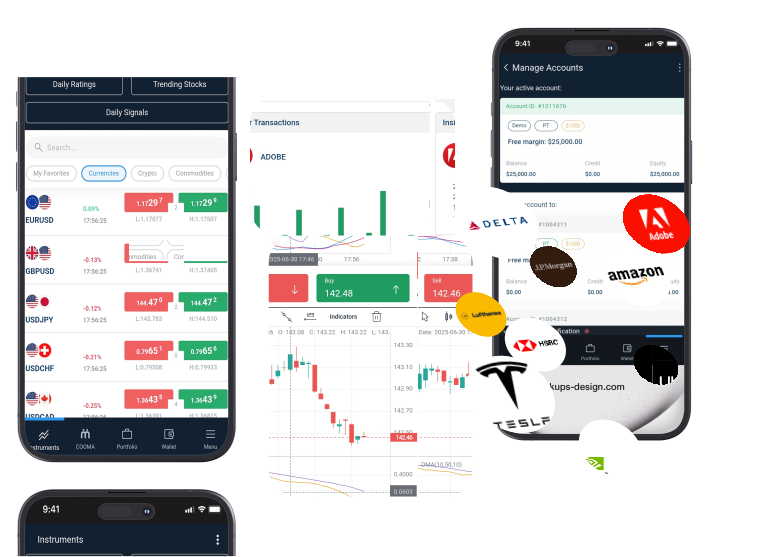
AFAQ Trade is an electronic platform specializing in trading Contracts for Difference (CFDs), with a primary focus on the Gulf markets.
The platform aims to provide a simple, secure, and professional trading experience through platforms such as WebTrader and Mobile App, supported by educational tools like webinars, an academy, demo accounts, and a copy-trading feature.
Licenses and Legal Entity
The platform is owned by Afaq FX Markets (Comoros) LTD, registered in the Comoros.
It is licensed by the MWALI International Services Authority under license number BFX2025079, adding a layer of transparency and reliability for investors.
Key Services
- Trading in forex, stocks, commodities, and indices.
- Islamic accounts are compliant with Sharia.
- Demo account with $25,000 virtual funds for training.
- Advanced analysis tools, live customer support, and competitive trading fees (low spreads).
- Secure deposit and withdrawal procedures.
Account Types
- Basic – Minimum deposit up to $4,999.
- Advanced – From $5,000 to $19,999.
- Premium – $20,000 and above with advanced features.
- Sharia Account – Sharia-compliant, swap-free, with Sharia fees applied after the 4th day.
- Demo – Realistic trading experience with no financial risk.
In Conclusion
Precious Metals continue to prove their value as essential assets for stability, diversification, and long-term growth. With technological advancements and the rise of accessible trading platforms like AFAQ, investors now have more tools than ever to engage in precious metals trading safely and efficiently. By understanding the market dynamics, historical performance, and associated risks, smart investors can use Precious Metals as a cornerstone of a balanced investment portfolio.
FAQs
Which precious metals are best for investment?
Gold and silver remain the top choices due to their liquidity and stability. Platinum and palladium offer diversification and industrial exposure.
How can I trade or invest in precious metals?
Investors can buy physical metals, trade CFDs, or invest in ETFs through online platforms like AFAQ.
What factors affect precious metal prices?
Inflation, USD strength, global demand, and mining supply are primary drivers of Precious Metals pricing.
Is it better to buy physical or digital metals?
Both have advantages—physical metals provide tangible security, while digital instruments offer flexibility and easier liquidity through precious metals trading platforms like AFAQ.