Learn Trading With a Structured Approach
The Dow Jones Industrial Average (DJIA) is one of the world’s most influential stock indexes, reflecting U.S. economic health and investor sentiment. Created in 1896, it tracks 30 major companies across sectors like technology, finance, and healthcare. As a price-weighted index, higher-priced stocks impact it more, unlike broader indices such as the S&P 500.
Its history includes milestones like the 1929 crash, the 2008 crisis, and the COVID-19 volatility. Traders use the Dow for benchmarking, sentiment analysis, and trading instruments like ETFs, CFDs, and futures. On platforms like AFAQ, investors gain tools, education, and account options to trade the Dow effectively.
What is Trading?
At its core, trading is the act of buying and selling financial instruments—such as stocks, currencies, commodities, or cryptocurrencies—with the goal of making a profit. Unlike long-term investing, which often focuses on holding assets for years, trading can involve shorter timeframes, ranging from seconds (scalping) to months (swing trading).
Trading plays a vital role in the global economy, as it provides liquidity, enables price discovery, and allows companies and governments to raise capital. For beginners, it is crucial to understand that trading is not gambling. It is based on market analysis, strategies, and risk control.
When you learn trading for beginners, you must grasp that it involves both art and science. The art lies in developing intuition and discipline, while the science is grounded in analyzing data, trends, and patterns. Many traders specialize in specific areas, such as learn trading options, learn trading forex, or learn trading stocks, depending on their interests and risk tolerance.
Ultimately, trading is about making informed decisions in uncertain environments. This requires knowledge, preparation, and the use of the right platforms, such as AFAQ, which provides access to global financial markets and helps new traders grow their skills.
How to Learn Trading?
Learning to trade involves a mix of theory, practice, and continuous improvement. Here are the key steps to begin your journey:
- Educate Yourself: Start with books, online courses, and tutorials about trading. Resources on learning trading in the stock market can provide structured lessons on how equities work. Similarly, specialized material on learning trading forex or learning trading options helps focus on niche areas.
- Practice with Demo Accounts: Platforms like AFAQ allow beginners to practice with virtual money. This is crucial because it helps you get comfortable with trading tools and strategies without risking real capital.
- Understand Market Fundamentals: Learn how global economies function, how central banks influence currencies, and how companies generate earnings that affect their stock prices.
- Use Trading Tools: Tools such as charting software, technical indicators, and risk calculators are essential for learning how markets behave.
- Follow Experts: Many beginners rely on mentors or copy trading options to learn faster. While this can provide guidance, it’s also important to build independent knowledge.
- Stay Consistent: Learning trading is not a one-day process. It requires constant learning, adaptation, and reviewing past trades to identify mistakes.
The internet has made it easier than ever to learn trading online, but with so much information available, beginners must filter credible resources and focus on step-by-step learning.
Importance of Financial Markets
Financial markets are the backbone of the global economy. They allow capital to flow between investors and organizations, provide liquidity for businesses, and enable individuals to grow wealth. For a beginner looking to learn trading, understanding the role of these markets is essential.
The main importance of financial markets includes:
- Capital Allocation: Companies raise funds through stock markets to expand operations, while governments issue bonds to finance public projects.
- Liquidity: Financial markets ensure that assets can be quickly bought and sold, allowing traders to enter and exit positions efficiently.
- Price Discovery: Through supply and demand, markets determine fair values for assets, which helps investors and policymakers make decisions.
- Risk Management: Instruments such as derivatives (options and futures) allow businesses and traders to hedge against risks like currency fluctuations or commodity price changes.
- Economic Growth: Healthy markets promote innovation and investment, which contribute to national and global economic growth.
For traders, markets are an arena where opportunities meet risks. By understanding their importance, beginners can appreciate why trading is not just personal profit-making but also a contribution to larger financial ecosystems.
Types of Trading
There are different approaches to trading, each with unique characteristics, risks, and opportunities. Beginners should explore each type to decide which suits their goals.
Stock Trading
When you learn to trade stocks, you buy and sell shares of publicly traded companies. Stock trading can be short-term (day trading or swing trading) or long-term (position trading). Corporate earnings, news, and economic data highly influence the stock market.
Forex Trading
The foreign exchange market (forex) is the largest financial market in the world. Learn trading forex involves exchanging one currency for another, such as EUR/USD. Forex trading is known for high liquidity and operates 24/5, making it appealing to global traders.
Commodity Trading
Commodities like oil, gold, and agricultural products are traded on specialized exchanges. Commodity trading allows traders to diversify portfolios and hedge against inflation.
Crypto Trading
Cryptocurrency trading is relatively new but rapidly growing. It involves buying and selling digital assets such as Bitcoin or Ethereum. Although volatile, it offers high-risk, high-reward opportunities.
For those starting, it is important to test different types through demo accounts on AFAQ before committing real funds.
Understanding Financial Markets
To learn trading, one must understand how financial markets operate. Markets function as networks of buyers and sellers where prices are influenced by factors such as supply and demand, government policies, corporate performance, and investor psychology.
There are two primary types of financial markets:
- Primary Market: Where new securities are issued for the first time.
- Secondary Market: Where existing securities are traded among investors.
Understanding concepts such as market liquidity, volatility, and capitalization helps traders gauge risks and opportunities. For example, learn trading options requires knowledge of derivatives markets, while learn trading in the stock market focuses on equities and exchanges.
Essential Trading Concepts
Every trader must master a few fundamental concepts before entering the market:
Supply and Demand
Prices in any market are determined by supply and demand. When demand exceeds supply, prices rise; when supply exceeds demand, prices fall.
Bid-Ask Spread
This is the difference between the price buyers are willing to pay (bid) and the price sellers want (ask). A smaller spread indicates a more liquid market.
Leverage and Margin
Leverage allows traders to control larger positions with a smaller amount of capital, while margin is the borrowed money used in trading. Though powerful, leverage can magnify both profits and losses, so it must be used cautiously.
Understanding these concepts is vital for anyone who wants to learn trading for beginners effectively.
Technical vs Fundamental Analysis
Trading strategies are built on two main schools of analysis:
Basics of Technical Analysis
This involves studying price charts, patterns, and indicators to predict future market movements. Tools such as moving averages, RSI, and MACD are commonly used.
Basics of Fundamental Analysis
This approach evaluates the underlying value of an asset by analyzing economic indicators, company earnings, and market conditions.
Combining Both Approaches
The most effective traders use a combination of both analyses. For example, a trader may use fundamental analysis to choose a stock and technical analysis to determine the best entry point.
Learning when to apply each approach is a key milestone in mastering trading.
Key Trading Tools and Platforms
Trading requires reliable platforms and tools to succeed:
Charting Tools
Visual representations of price movements help traders identify trends and patterns.
Trading Platforms
Choosing the right platform is critical. Platforms like AFAQ provide access to multiple markets, advanced charting, and risk management features.
Broker Selection
A broker acts as the intermediary between traders and markets. Choosing a regulated, low-cost broker is vital for long-term success.
These tools form the backbone of modern trading, and without them, beginners would struggle to learn trading online effectively.
How to Build a Trading Strategy?
A trading strategy is a structured plan that defines how you enter and exit trades. It typically includes:
- Defining goals (short-term income vs long-term wealth)
- Risk management rules (maximum loss per trade)
- Entry and exit signals (based on analysis)
- Continuous testing and improvement
Beginners should start simple, test strategies on demo accounts, and then gradually apply them in real markets.
Tips for Long-Term Success
Long-term trading success requires more than technical skills. Traders must develop discipline, patience, and resilience. Key tips include:
- Avoid emotional decisions.
- Keep a trading journal.
- Never risk more than you can afford to lose.
- Continuously learn and adapt to new market conditions.
By applying these habits, traders can survive market volatility and steadily improve their performance.
Services Of Afaq
AFAQ Trade is an electronic platform specializing in trading Contracts for Difference (CFDs), with a primary focus on the Gulf markets.
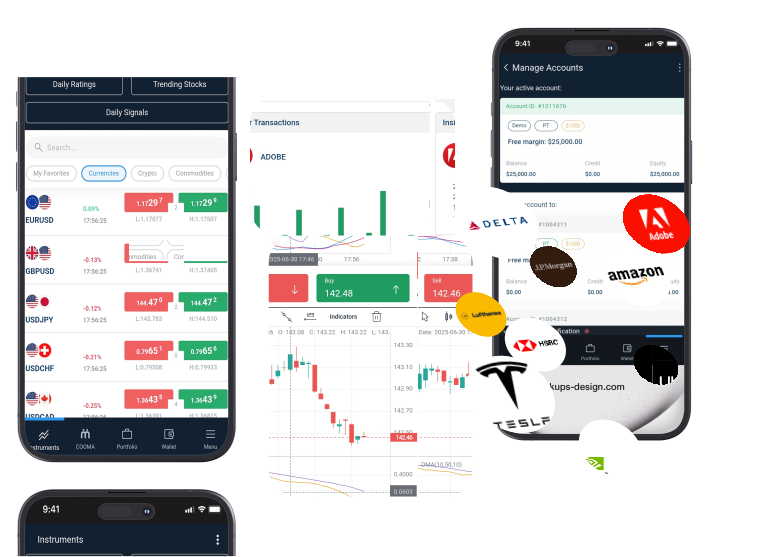
The platform aims to provide a simple, secure, and professional trading experience through platforms such as WebTrader and Mobile App, supported by educational tools like webinars, an academy, demo accounts, and a copy-trading feature.
Licenses and Legal Entity
The platform is owned by Afaq FX Markets (Comoros) LTD, registered in the Comoros.
It is licensed by the MWALI International Services Authority under license number BFX2025079, adding a layer of transparency and reliability for investors.
Key Services
- Trading in forex, stocks, commodities, and indices.
- Islamic accounts are compliant with Sharia.
- Demo account with $25,000 virtual funds for training.
- Advanced analysis tools, live customer support, and competitive trading fees (low spreads).
- Secure deposit and withdrawal procedures.
Account Types
- Basic – Minimum deposit up to $4,999.
- Advanced – From $5,000 to $19,999.
- Premium – $20,000 and above with advanced features.
- Sharia Account – Sharia-compliant, swap-free, with Sharia fees applied after the 4th day.
- Demo – Realistic trading experience with no financial risk.
In Conclusion
The journey to learn trading is both challenging and rewarding. From understanding the basics of markets to mastering strategies and tools, every step builds your confidence and skills. Platforms like AFAQ make this journey easier by offering educational resources, secure trading environments, and access to global financial markets.
Trading is not a get-rich-quick scheme. It is a long-term process that requires knowledge, consistency, and adaptability. If you’re ready to start, AFAQ can be your trusted partner in achieving financial independence through trading.
FAQs
How do I teach myself to trade?
You can teach yourself by reading books, taking online courses, practicing on demo accounts, and following expert traders.
Can I make $1000 per day from trading?
It is possible but requires advanced skills, significant capital, and high risk tolerance. Beginners should focus on learning first.
Is $100 enough to start trading?
Yes, many brokers allow you to start with as little as $100. However, proper risk management is crucial.
Why do 90% of traders lose?
Most traders fail due to a lack of education, poor risk management, and emotional decision-making.