What is Commodity Trading?
Commodity trading has long been central to global commerce, evolving from ancient exchanges of gold, silver, and grains into a modern system powered by technology and online platforms. Today, it connects producers, suppliers, and investors worldwide, offering opportunities to hedge risks, stabilize resources, and generate profits. With expert insights from AFAQ, traders gain access to professional tools, analysis, and guidance that make commodities accessible to beginners and professionals alike. This blog explores the definition, types, and strategies of commodity trading, highlights its economic role, and explains why choosing the right platform is key to long-term trading success.
Definition of Commodity Trading
At its core, commodity trading refers to the buying and selling of raw materials or primary goods. These goods, called commodities, are standardized and interchangeable with others of the same type. Instead of trading branded or unique products, commodities are universal—gold from one supplier is the same as gold from another, and crude oil of the same grade maintains identical value regardless of source.
Commodity trading is facilitated through specialized markets and exchanges. Traders can participate in commodity trading, futures, spot trading, and contracts that determine how and when commodities will be delivered. The aim is not only to buy and sell physical goods but also to speculate on price movements and manage risks associated with production and consumption.
For example, a farmer might sell futures contracts on wheat to lock in a price and protect against falling market values. On the other hand, an airline company might engage in commodity trading of crude oil futures to secure stable fuel prices for the future. For investors, commodities provide an opportunity to diversify their portfolio and gain exposure to global economic trends.
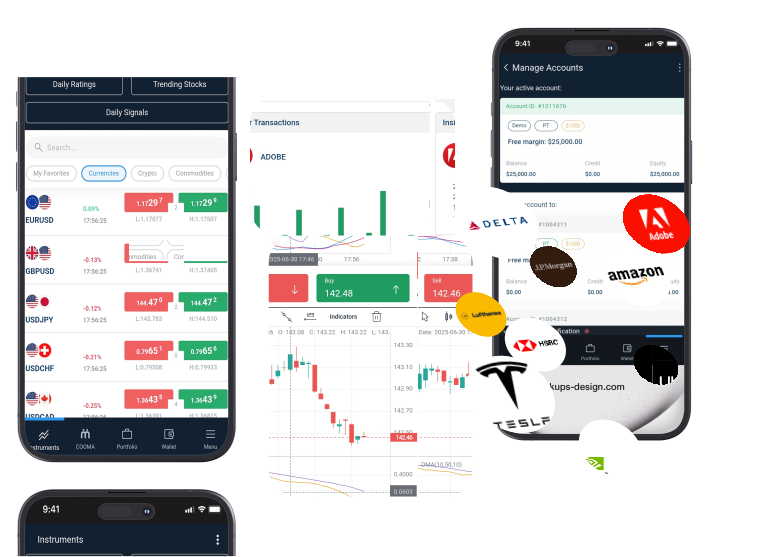
Platforms like AFAQ bring together market data, commodity trading economics, and expert analysis to simplify this process for traders and investors. By leveraging real-time signals and professional advice from commodity trading advisors, traders can make more accurate decisions.
Types of Commodities
Commodities play a vital role in global trade, serving as the foundation of economic activity. They are essential goods that drive markets and connect producers with consumers worldwide.
Hard Commodities (Metals, Energy)
Hard commodities refer to natural resources extracted from the earth, such as metals and energy products. These are the backbone of industrial economies and are heavily traded worldwide. Examples include:
- Gold, silver, platinum, and copper – highly sought after in both investment and industrial uses. Commodity trading gold is especially popular as gold serves as a safe-haven asset during times of inflation or market uncertainty.
- Crude oil, natural gas, and coal – essential sources of energy driving global industries and transportation. Commodity trading of crude oil is one of the most volatile and lucrative segments, attracting both hedgers and speculators.
Soft Commodities (Agricultural Products)
Soft commodities are grown rather than mined, making them dependent on weather, farming practices, and geopolitical events. Examples include:
- Grains like wheat, corn, and rice are staples in global food markets.
- Coffee, cocoa, and sugar dominate the beverage and food industries.
- Cotton and timber, used in manufacturing and textiles.
Both hard and soft commodities provide opportunities for traders to profit. By understanding commodity trading types, individuals can align their strategies with markets that best fit their interests and risk tolerance.
Importance of Commodity Trading in the Global Economy
Commodity trading plays a vital role in stabilizing and driving the global economy. Without it, price volatility in raw materials would create uncertainty for producers, manufacturers, and consumers. For instance, commodity trading futures ensure that farmers can plan their income, while industries dependent on crude oil or metals can hedge against price spikes.
Furthermore, commodities act as an economic indicator. Rising demand for metals like copper often signals industrial growth, while fluctuations in oil prices reflect global supply and demand dynamics. For investors, commodities serve as a hedge against inflation, since raw materials tend to rise in value when paper currencies lose purchasing power.
Platforms like AFAQ are bridging the gap between local and global markets by providing traders with commodity trading economics insights. With access to professional market analysis, traders gain a deeper understanding of demand, supply, and geopolitical factors that impact commodity prices. This knowledge allows them not only to speculate but also to contribute to the broader stability of international trade.
How Commodity Markets Operate?
Commodity markets are structured around two main forms: physical trading and derivative trading.
- Physical Trading
- Involves the direct buying and selling of commodities like wheat, gold, or crude oil. Physical traders manage logistics, delivery, and storage, ensuring supply chains function smoothly.
- Derivative Trading
- Instead of physical delivery, derivative trading involves contracts like commodity trading, futures or options. These contracts specify the price, quantity, and delivery date of commodities. Most traders operate in this space because it allows them to profit from price movements without owning or handling the actual goods.
Exchanges like the Chicago Mercantile Exchange (CME) and London Metal Exchange (LME) standardize contracts, ensuring fairness and efficiency. Online platforms like AFAQ make it easier for individuals to access these markets by offering real-time commodity trading signals, expert analysis, and user-friendly tools for executing trades.
Strategies in Commodity Trading
Strategies in commodity trading help investors navigate market fluctuations and optimise returns. They provide structured approaches to managing risk and seizing opportunities.
Hedging Strategies
Hedging is used to minimize risk by locking in prices. Farmers, manufacturers, and corporations often use futures contracts to protect themselves from market volatility. For example, an airline might hedge against rising fuel prices by engaging in commodity trading of crude oil futures.
Speculation Strategies
Speculators aim to profit from price fluctuations by predicting market movements. While riskier, speculation can lead to significant rewards if combined with a sound commodity trading strategy.
Diversification
Investors often use commodities to diversify their portfolio. Including commodities like gold, silver, or oil reduces dependence on stock or bond markets. With commodity trading platforms, diversification becomes easier as traders can access multiple asset classes from one account.
Tips for Successful Commodity Trading
Success in commodity trading requires discipline, education, and the right tools. Here are expert tips to enhance your journey:
- Choose a reliable commodity trading platform – Ensure it provides access to real-time data, market insights, and secure transactions.
- Understand commodity trading economics – Analyze how global events, demand, and supply impact prices.
- Follow expert advice – Consider working with a commodity trading advisor to gain insights on best practices.
- Stay diversified – Avoid putting all resources into one commodity; balance across gold, crude oil, and agricultural products.
- Use risk management tools – Always set stop-loss orders and manage exposure carefully.
By following these practices, traders increase their chances of profitability while reducing the risks associated with volatile markets. With AFAQ’s guidance, both new and experienced traders can adopt tested strategies that align with their goals.
Services Of Afaq
AFAQ Trade is an electronic platform specialized in trading Contracts for Difference (CFDs), with a primary focus on the Gulf markets.
The platform aims to provide a simple, secure, and professional trading experience through platforms such as WebTrader and Mobile App, supported by educational tools like webinars, an academy, demo accounts, and a copy-trading feature.
Licenses and Legal Entity
The platform is owned by Afaq FX Markets (Comoros) LTD, registered in Comoros.
It is licensed by the MWALI International Services Authority under license number BFX2025079, adding a layer of transparency and reliability for investors.
Key Services
- Trading in forex, stocks, commodities, and indices.
- Islamic accounts are compliant with Sharia.
- Demo account with $25,000 virtual funds for training.
- Advanced analysis tools, live customer support, and competitive trading fees (low spreads).
- Secure deposit and withdrawal procedures.
Account Types
- Basic – Minimum deposit up to $4,999.
- Advanced – From $5,000 to $19,999.
- Premium – $20,000 and above with advanced features.
- Sharia Account – Sharia-compliant, swap-free, with Sharia fees applied after the 4th day.
- Demo – Realistic trading experience with no financial risk.
In Conclusion
Commodity trading is more than just buying and selling goods—it’s a sophisticated global system that influences economies, industries, and investments. Whether engaging in commodity trading gold, commodity trading crude oil, or agricultural products, traders must understand the mechanics, strategies, and risks involved.
With AFAQ providing expert insights, reliable commodity trading platforms, and professional guidance, individuals and businesses can successfully navigate the complexities of the market. By applying the right strategies, focusing on diversification, and staying informed about global commodity trading economics, traders can achieve sustainable growth in this dynamic sector.
FAQs
What is a commodity in trading?
A commodity is a raw material or primary product, such as metals, energy, or agricultural goods. These are standardized and interchangeable, making them ideal for global trade.
What does a commodities trader do?
A commodities trader buys and sells raw materials or contracts tied to them. Their role includes analyzing markets, predicting price movements, and managing risks.
Is commodity trading halal?
Yes, commodity trading can be halal if it complies with Islamic principles, such as avoiding interest (riba), ensuring asset ownership, and avoiding speculative gambling.
What is the average salary of a commodities trader?
The salary varies by region and experience. On average, commodities traders can earn from $60,000 to well over $200,000 annually, with bonuses tied to performance.
How to trade commodities for beginners?
Beginners should start by learning the basics of commodity trading types, selecting a secure commodity trading platform, and following expert market insights from firms like AFAQ. Starting small, diversifying investments, and using risk management tools are highly recommended.