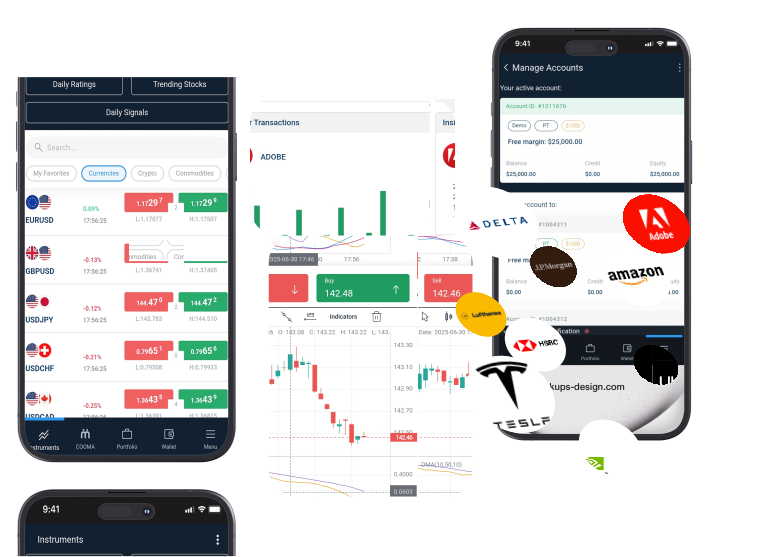
What is CFD Trading? Contracts for Difference explained
In today’s financial world, more and more traders are turning to CFD trading as a way to participate in global markets. Whether you are interested in stocks, commodities, forex, or even cryptocurrencies, CFDs—or Contracts for Difference—allow traders to speculate on price movements without owning the underlying asset. This method of trading has become a popular alternative to traditional investing, mainly because it offers flexibility, the ability to go long or short, and access to a wide variety of markets.
With platforms like AFAQ providing education and tools, traders now have the resources to understand both the benefits and risks of CFD trading. For beginners, learning how CFDs work is essential before committing capital. This blog will explore everything you need to know: from the basics of CFD trading to strategies, risks, and practical tips for success.
What is CFD Trading?
At its core, CFD trading means speculating on the rising or falling prices of financial markets without physically owning the asset. A CFD (Contract for Difference) is an agreement between a trader and a CFD trading broker to exchange the difference in the asset’s price from the time the trade is opened until it is closed.
For example, if you open a CFD on Apple stock and the price rises, you profit from the difference between the entry and exit prices. Conversely, if the price falls, you incur a loss. This makes CFDs highly attractive because they provide exposure to market movements without requiring ownership of shares, gold bars, or barrels of oil.
CFDs are versatile, and you can trade almost anything: stocks, forex, commodities, indices, and even digital assets. This flexibility is one of the biggest reasons why CFD trading for beginners has gained so much attention in the online trading world.
How CFD Trading Works?
CFD trading allows investors to speculate on the price movements of various assets without actually owning them. It offers flexibility to profit from both rising and falling markets.
Contracts for Difference Explained
A CFD is a contract between two parties—the trader and the broker. When you open a position, you’re betting on whether the price of the chosen asset will rise or fall. The difference between the entry price and exit price determines your profit or loss. Importantly, CFDs mirror the real market price of the asset but don’t require physical delivery.
Long vs Short Positions
One of the biggest advantages of CFD trading is the ability to trade in both directions.
- Going long: If you believe the price of an asset will rise, you buy (long position).
- Going short: If you expect the price to fall, you sell (short position).
This flexibility allows traders to benefit from both bullish and bearish markets, which is not always possible with traditional investing.
Leverage and Margin Trading
Another defining feature of CFD trading is leverage. Traders can control a large position with a relatively small amount of money (margin). For example, with a leverage of 10:1, you could control a $10,000 position by only depositing $1,000.
While leverage magnifies profits, it also increases risk. This is why understanding margin requirements and risk management is critical before opening a CFD trading account.
Markets Available for CFD Trading
CFD trading provides access to a wide range of global markets. Traders can explore different asset classes to diversify strategies and seize new opportunities.
Stocks
CFDs allow you to speculate on the price movements of leading global companies like Apple, Tesla, or Microsoft. Unlike owning the shares, you don’t need to worry about share transfers or dividends.
Forex
CFD trading in forex is highly popular because of the liquidity and volatility in currency markets. You can trade major pairs like EUR/USD, GBP/USD, or JPY/USD with leverage.
Commodities
Through CFDs, traders can access commodities such as oil, silver, and agricultural products. Commodity CFD trading is attractive because global supply and demand factors make prices highly dynamic.
Indices
If you want broad market exposure, CFDs on indices like the S&P 500 or the Dow Jones offer a chance to speculate on entire economies rather than individual stocks.
Cryptocurrencies
For those interested in digital assets, CFD trading crypto provides an easier way to speculate on coins like Bitcoin or Ethereum without the need for crypto wallets or exchanges.
Benefits of CFD Trading
- Access to multiple markets: With one CFD trading platform, you can trade stocks, forex, commodities, and more.
- Leverage opportunities: Control larger positions with smaller deposits.
- No ownership required: Trade assets without physically owning them.
- Flexibility: Ability to go long or short.
- 24/5 market access: Many brokers provide continuous trading opportunities, especially in forex.
These advantages make CFDs appealing, but they should always be balanced with awareness of the risks.
Risks of CFD Trading
While the benefits are appealing, CFD trading comes with significant risks:
- Leverage risk: Small price movements can result in large losses.
- Market volatility: Sudden events can trigger big swings in prices.
- Broker dependency: The quality of your CFD trading broker impacts execution, spreads, and account safety.
- No ownership: Since you don’t own the asset, you miss out on dividends or other ownership rights.
Traders must always balance risk with reward, using stop losses, proper position sizing, and a disciplined approach.
Popular CFD Trading Strategies
CFD trading strategies help traders navigate market volatility and manage risks effectively. They provide structured approaches to identify opportunities and improve decision-making.
Day Trading
This strategy involves buying and selling CFDs on the same day, aiming to profit from short-term price movements.
Swing Trading
Swing traders hold positions for several days or weeks to capture medium-term market swings.
Scalping
Scalping is a high-frequency strategy where traders make multiple small trades to profit from tiny price fluctuations.
Hedging with CFDs
Professional traders often use CFDs to hedge other positions. For example, if you own physical stocks, you can short a CFD to protect against potential losses.
Step-by-Step Guide to Start CFD Trading
CFD trading is a modern investment method that offers diverse opportunities to profit in global financial markets. This guide will walk you through the essential steps to start trading safely and effectively:
Opening a Trading Account
First, you need to register with a trusted CFD trading broker. Ensure the broker is regulated and offers a user-friendly CFD trading platform.
Funding Your Account
Once your CFD trading account is approved, deposit funds via available methods like bank transfers, credit cards, or e-wallets.
Choosing a Market
Select whether you want to trade stocks, forex, commodities, indices, or cryptocurrencies. Beginners often start with major forex pairs or well-known stocks.
Placing Your First CFD Trade
After choosing the market, decide whether to go long or short. Set stop-loss and take-profit levels to manage your risk.
Tips for Successful CFD Trading
- Educate yourself: Learn continuously with resources like AFAQ.
- Start small: Use demo accounts before committing real money.
- Risk management: Never risk more than you can afford to lose.
- Stay disciplined: Follow your plan and avoid emotional trading.
- Diversify: Trade across multiple markets to spread risk.
Services Of Afaq
AFAQ Trade is an electronic platform specializing in trading Contracts for Difference (CFDs), with a primary focus on the Gulf markets.
The platform aims to provide a simple, secure, and professional trading experience through platforms such as WebTrader and Mobile App, supported by educational tools like webinars, an academy, demo accounts, and a copy-trading feature.
Licenses and Legal Entity
The platform is owned by Afaq FX Markets (Comoros) LTD, registered in the Comoros.
It is licensed by the MWALI International Services Authority under license number BFX2025079, adding a layer of transparency and reliability for investors.
Key Services
- Trading in forex, stocks, commodities, and indices.
- Islamic accounts are compliant with Sharia.
- Demo account with $25,000 virtual funds for training.
- Advanced analysis tools, live customer support, and competitive trading fees (low spreads).
- Secure deposit and withdrawal procedures.
Account Types
- Basic – Minimum deposit up to $4,999.
- Advanced – From $5,000 to $19,999.
- Premium – $20,000 and above with advanced features.
- Sharia Account – Sharia-compliant, swap-free, with Sharia fees applied after the 4th day.
- Demo – Realistic trading experience with no financial risk.
In Conclusion
CFD trading opens doors to diverse markets and offers flexibility unmatched by many traditional investment methods. However, the risks are just as significant as the benefits. With platforms like AFAQ, traders can access expert insights, educational material, and the right tools to trade more effectively. Whether you’re a beginner or an experienced trader, understanding CFD trading strategies, risks, and market dynamics is the first step to success.
FAQs
What is CFD trading?
CFD trading stands for Contracts for Difference, where traders speculate on price changes without owning the asset.
Is CFD halal or haram?
The ruling depends on leverage, interest, and contract terms. Traders should consult Islamic scholars or use Islamic trading accounts if available.
Is CFD trading a good idea?
It can be if approached with discipline, proper risk management, and education. Without these, it can be very risky.
Is forex trading a CFD?
Yes, many forex trades are executed as CFDs, allowing traders to speculate on currency pairs without holding the actual currency.